 Save to Pinterest
 My grandmother used to say that mashed potatoes were the true test of a cook's patience. I didn't understand until I was standing at her stove, watching her stir butter into steaming potatoes with the kind of focus most people reserve for important decisions. The kitchen filled with this warm, pillowy smell, and suddenly I got it—this wasn't just a side dish, it was comfort in a bowl.
I made these for my sister's dinner party last spring, and the moment everyone tasted them, the whole table went quiet in that specific way that means something just became the favorite part of the meal. She's requested them for every gathering since, which felt like a small victory I didn't expect from boiling and mashing potatoes.
Ingredients
- Yukon Gold or Russet potatoes (2 lbs): Yukon Golds are naturally buttery and break down into silk, but Russets are sturdier if you like texture you can actually feel between bites.
- Unsalted butter (4 tbsp): Room temperature butter blends in without lumps, and unsalted lets you control the salt level yourself.
- Whole milk (1/2 cup): Warm milk incorporates smoother and faster than cold milk straight from the fridge.
- Salt (1 tsp plus more for boiling): Salt the water generously so the potatoes taste seasoned from the inside out, not just sprinkled on top.
- Freshly ground black pepper (1/4 tsp): Grind it fresh if you can—pre-ground pepper fades in flavor after the jar's been open for months.
- Heavy cream or sour cream (2 tbsp optional): This is the secret weapon if your potatoes ever feel flat or less forgiving than you'd hoped.
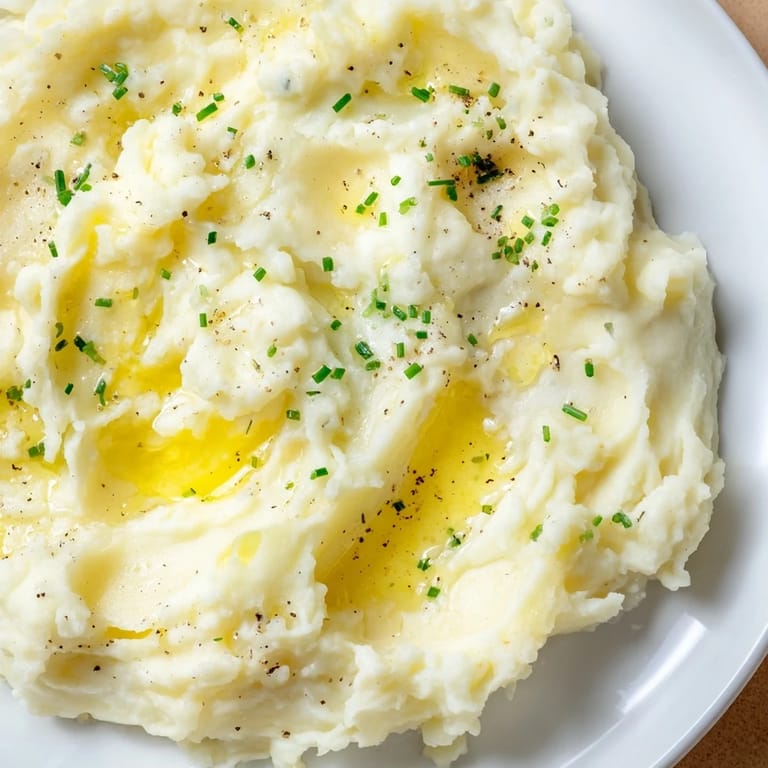
- Chopped chives or parsley: A handful of fresh herbs at the end is the difference between a good side dish and one people remember.
Tired of Takeout? 🥡
Get 10 meals you can make faster than delivery arrives. Seriously.
One email. No spam. Unsubscribe anytime.
Instructions
- Boil the potatoes until tender:
- Chunk your potatoes, cover them with cold, salted water, and bring everything to a rolling boil. This even cooking matters more than you'd think. Simmer for 15 to 20 minutes until a fork slides through like butter.
- Drain and rest:
- Drain them completely, then let them sit in the warm pot for a couple of minutes so the steam escapes and they're no longer waterlogged. This step changes everything about the texture.
- Mash with butter and milk:
- Add your room-temperature butter and warm milk, then mash until you reach that perfect balance between smooth and fluffy. A ricer gives you restaurant-quality results if you want to go that route.
- Season and taste:
- Salt and pepper to your preference, then taste before you transfer them to a bowl. This is your moment to adjust and make them exactly right.
- Finish and serve:
- Stir in heavy cream if you're going for extra richness, top with fresh herbs, and serve hot while the steam is still rising.
 Save to Pinterest
 There's this moment when you're cooking for people you care about where everything else fades away, and it's just you and the food becoming what you hope it will be. These potatoes have always been that for me, the thing that feels like love in a side dish.
The Texture Question
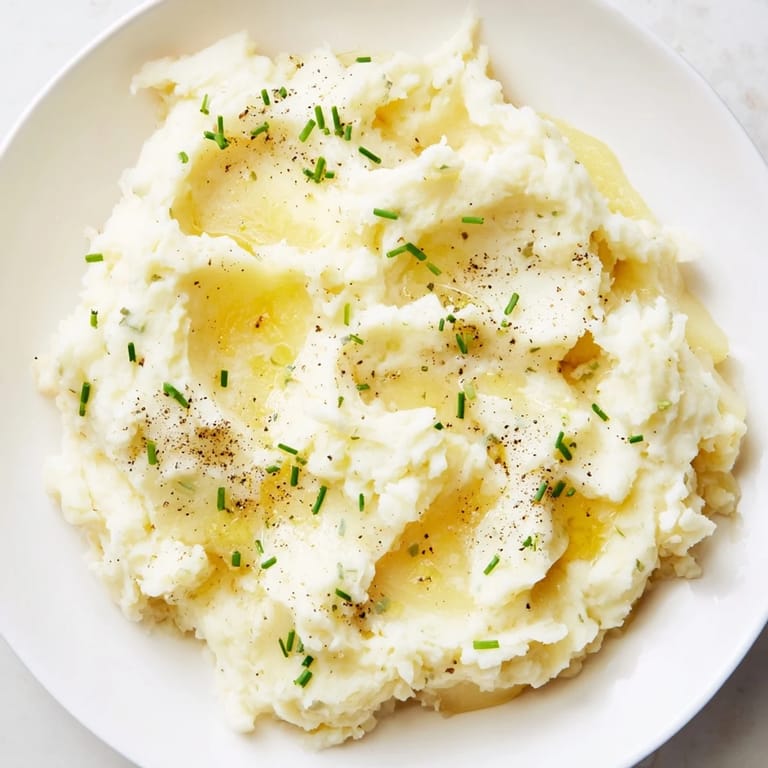
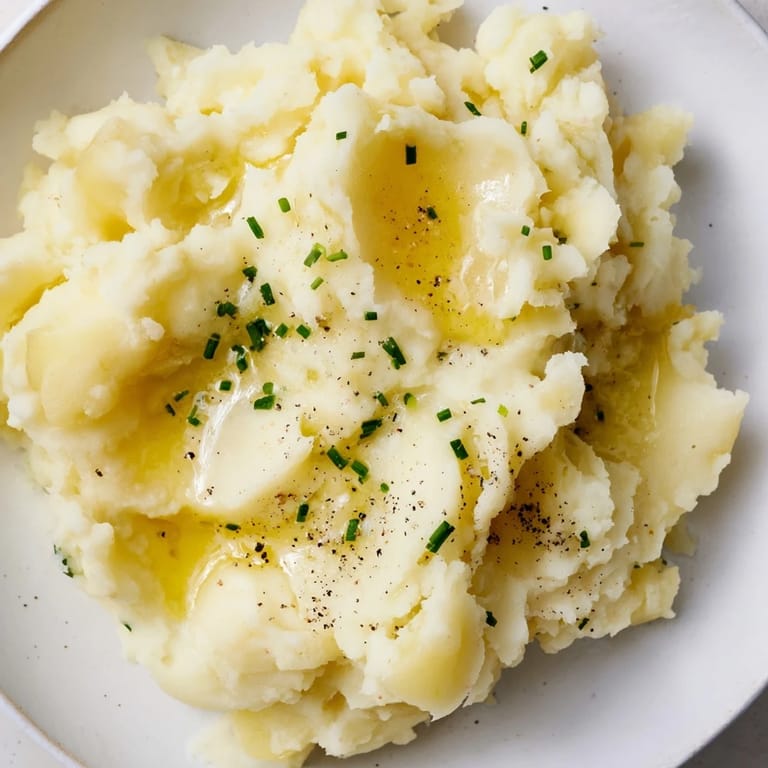
Some people want them completely smooth like clouds, and others prefer a little resistance, a few small chunks that remind you they're real food. I've learned to respect both preferences, and honestly, the beauty of mashed potatoes is that you control that completely. If you're the chunky type, skip the ricer and use a regular masher with shorter, quicker strokes.
Storage and Reheating
Leftovers can sit in an airtight container in the fridge for three days, though they're honestly best fresh. If you need to reheat them, warm them gently on the stove with a splash of milk so they don't dry out and turn grainy. Microwaving works in a pinch, but you'll lose some of that tender texture.
Making Them Your Own
The base recipe is a canvas—I've stirred in roasted garlic, sharp cheddar, caramelized onions, and even a handful of chives that I'd snipped fresh from the garden. The core technique stays the same, but the personality changes completely depending on what's calling to you that day.
- Fold in shredded cheese, crispy bacon bits, or sautéed mushrooms for depth and texture.
- Swap half the milk for chicken or vegetable stock for a savory shift in flavor.
- Add a touch of horseradish or mustard powder if you want something with an edge.
 Save to Pinterest
 Mashed potatoes are honest food—there's nowhere to hide with good ingredients and a gentle touch. Make them with intention, and they'll become someone's comfort food, maybe even their favorite memory on a plate.
Recipe FAQs
- → What type of potatoes work best?
Yukon Gold or Russet potatoes are ideal for a creamy, fluffy texture after mashing.
- → Can I use plant-based milk alternatives?
Yes, plant-based milks can substitute whole milk for a dairy-free version without compromising texture.
- → How can I make the potatoes extra smooth?
Using a potato ricer instead of a masher results in ultra-smooth, lump-free potatoes.
- → Are there suggested flavor variations?
Add roasted garlic, cheese, or sautéed onions to introduce more complex tastes.
- → What garnishes enhance presentation and flavor?
Chopped chives or parsley provide a fresh, colorful garnish that complements the creamy potatoes.