 Save to Pinterest
 The smell of cabbage cooking used to make me skeptical until a neighbor invited me over one cold evening and served this alongside roasted pork. I watched her stir cream into wilted greens, and suddenly the whole dish transformed into something silky and warm. That first bite changed everything I thought I knew about humble vegetables. Now it shows up on my table more than I ever expected. Sometimes the simplest things surprise you most.
I made this for a small dinner party once, worried it might seem too plain next to fancier sides. Instead, everyone went back for seconds and asked for the recipe. One friend admitted she never liked cooked cabbage before that night. Watching her scrape the last bit from the serving dish made me realize how much flavor and care can elevate something so ordinary.
Ingredients
- Green cabbage: Choose a firm, heavy head with crisp outer leaves, and shred it finely so it wilts evenly and soaks up the creamy sauce.
- Yellow onion: A small one adds just enough sweetness without overwhelming the delicate cabbage flavor.
- Unsalted butter: This gives you control over the salt level and adds a rich, silky base for sauteing.
- Whole milk: It creates a lighter sauce than cream alone, but you can use half and half if you want something more indulgent.
- Heavy cream: This is what makes the sauce cling and turn velvety, coating each strand of cabbage.
- All purpose flour: Just a tablespoon thickens the sauce gently without making it gluey or starchy.
- Ground nutmeg: A tiny pinch brings warmth and a subtle sweetness that feels almost nostalgic.
- Salt and black pepper: Season generously, tasting as you go, because cabbage needs more salt than you think.
- Fresh parsley: A sprinkle at the end adds color and a hint of brightness to balance the richness.
Tired of Takeout? 🥡
Get 10 meals you can make faster than delivery arrives. Seriously.
One email. No spam. Unsubscribe anytime.
Instructions
- Start with the aromatics:
- Melt the butter in a large skillet over medium heat and add the chopped onion, cooking gently for 2 to 3 minutes until it softens and smells sweet. You want it tender, not browned.
- Wilt the cabbage:
- Toss in the shredded cabbage with a generous pinch of salt and stir often for 6 to 8 minutes. It will shrink down dramatically and turn tender.
- Coat with flour:
- Sprinkle the flour over the wilted cabbage and stir well to coat every strand. Cook for about a minute to get rid of any raw flour taste.
- Add the dairy:
- Slowly pour in the milk and cream, stirring constantly so no lumps form. The mixture will start to come together as it heats.
- Simmer until thickened:
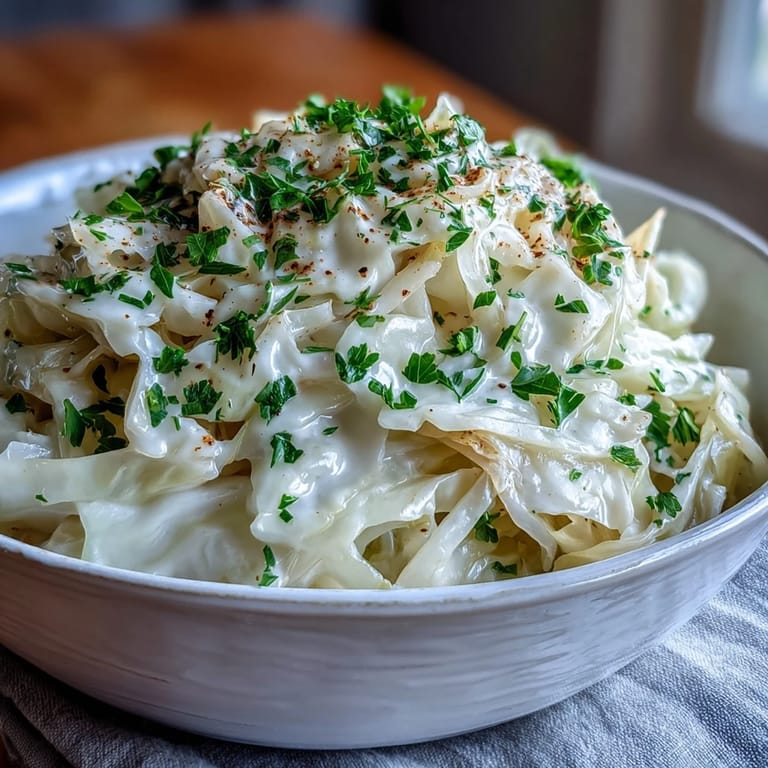
- Lower the heat and let it bubble gently for 6 to 8 minutes, stirring now and then. The sauce will thicken and cling to the cabbage beautifully.
- Season and finish:
- Stir in the nutmeg, taste, and add more salt and pepper as needed. Remove from heat, transfer to a serving dish, and scatter parsley on top if you like.
 Save to Pinterest
 One winter night I served this with nothing but crusty bread and a simple salad, and it felt like a full meal. My partner looked up surprised and said it tasted like comfort itself. That is when I realized this dish does not need anything fancy around it to feel complete.
How to Store and Reheat
Leftovers keep well in an airtight container in the fridge for up to three days. When you reheat it on the stovetop over low heat, add a splash of milk to loosen the sauce because it thickens as it sits. I have found that reheating in the microwave works too, but stir it halfway through and add a little liquid if it looks dry. The texture softens a bit the next day, but the flavor actually deepens.
Ways to Change It Up
If you want more depth, saute a clove of minced garlic with the onion at the start. Swapping half the green cabbage for Savoy or Napa gives you a more delicate, tender bite. For a lighter version, skip the cream and use all milk, though the sauce will be thinner. I have also stirred in a handful of grated Parmesan at the end for a sharper, saltier finish that works beautifully with roasted meats.
Serving Suggestions
This pairs perfectly with roast chicken, pork chops, or even a simple pan seared steak. I have served it alongside mashed potatoes and gravy for a cozy winter dinner, and it held its own without competing for attention. As a vegetarian main, serve it with thick slices of toasted sourdough to soak up the creamy sauce.
- Serve it warm straight from the skillet for the best texture.
- Garnish with extra cracked black pepper or a sprinkle of smoked paprika for a little kick.
- Pair it with roasted root vegetables for a complete seasonal plate.
 Save to Pinterest
 This dish taught me that you do not need exotic ingredients to make something memorable. Just a little butter, some cream, and patience can turn the ordinary into something you crave.
Recipe FAQs
- → Can I use a different type of cabbage?
Yes, Savoy or Napa cabbage work beautifully and offer a more delicate texture. You can also mix half green cabbage with one of these varieties for variety.
- → How do I make this lighter?
Simply use all whole milk instead of adding heavy cream. The sauce will still be creamy and flavorful, just with fewer calories and less fat.
- → Can this be made gluten-free?
Absolutely. Replace the all-purpose flour with your favorite gluten-free flour blend. The texture and taste remain virtually identical.
- → What proteins pair well with creamed cabbage?
This side dish complements roast chicken, pork chops, sausages, and grilled salmon wonderfully. It's also hearty enough to serve as a vegetarian main with bread.
- → How can I add more flavor?
Sauté a clove of minced garlic with the onion, or add a pinch of caraway seeds for a traditional European touch. Fresh thyme also works beautifully.
- → Can I prepare this ahead of time?
Yes, you can cook it up to 2 days ahead and refrigerate. Reheat gently on the stovetop, adding a splash of milk if the sauce has thickened too much.