 Save to Pinterest
 There's something about the first warm afternoon of spring that makes you crave something green and alive on your plate. I was standing in my kitchen on one of those perfect days, sunlight streaming across the counter, when I realized I'd been making salads all wrong for years—drowning good vegetables in heavy dressing like they needed rescuing. That's when I started playing with this honey mustard version, letting the dressing complement rather than bury the delicate flavors. It became the salad I make when I want to actually taste spring instead of just eating it.
I made this for a potluck last summer where everyone brought heavy casseroles and potato salads, and watching people come back for thirds of something light and bright felt like a small victory. My friend Sarah kept asking for the dressing recipe, convinced I'd bought it from some fancy market, and I loved admitting I'd whisked it together in under a minute. That's when I knew this had become the kind of recipe worth keeping close.
Ingredients
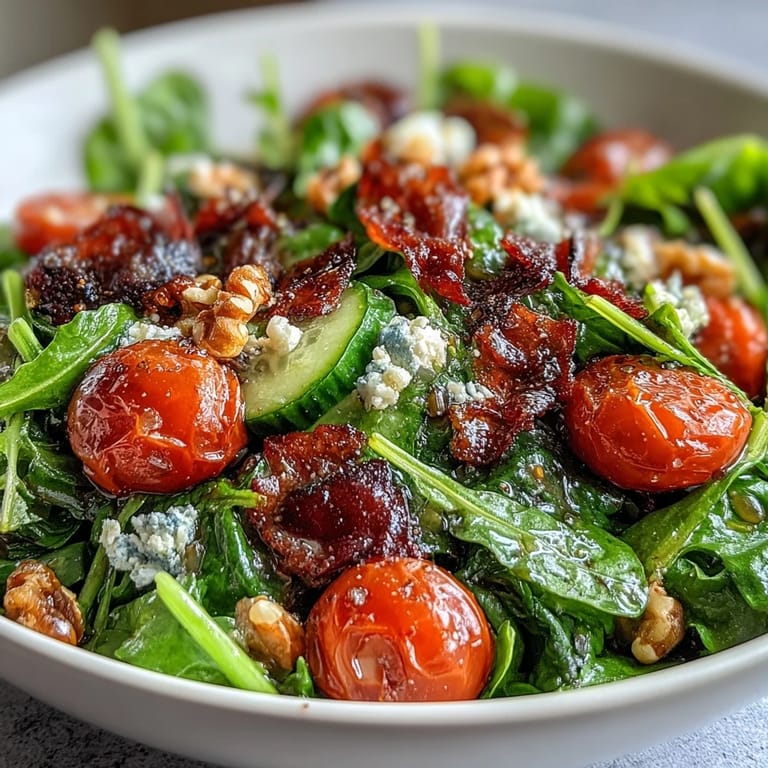
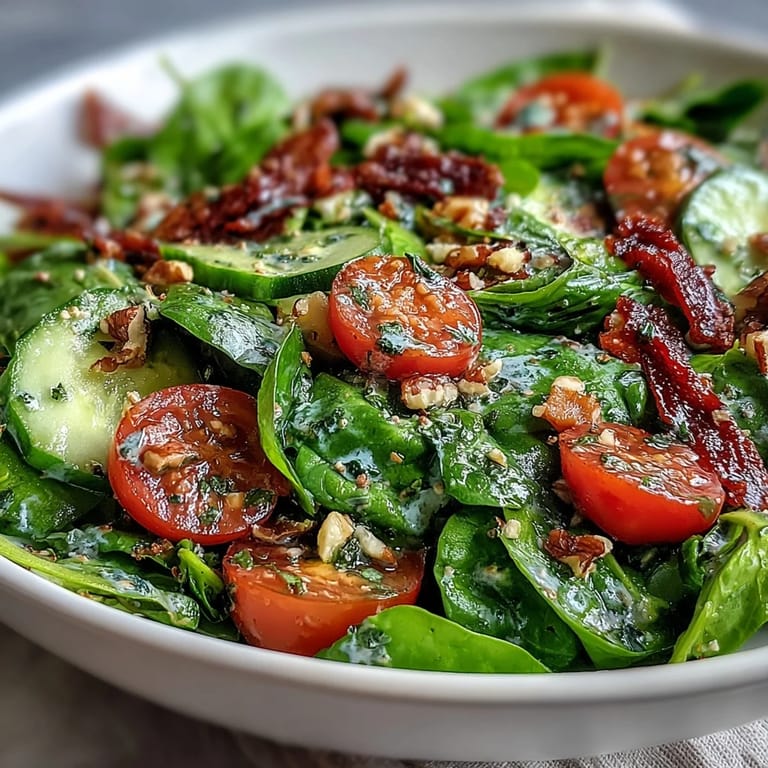
- Spring greens mix: Choose whatever feels tender and fresh to you—arugula brings peppery bite, baby spinach is mild and buttery, mâche has an almost nutty sweetness, and mixing them all together gives you the most interesting salad.
- Cucumber: Slice it thin so it catches the dressing and stays crisp, and don't worry about peeling it unless you prefer that texture.
- Cherry tomatoes: Halving them matters because whole ones roll around and split awkwardly, plus the flat sides sit better in your mouth when you eat.
- Radish: This is your crunch factor and your subtle spice—use a mandoline if you have one because even thickness means they stay crunchy longer.
- Carrot: Julienne it thin so it softens slightly from the dressing while still keeping some snap, or just grate it if you're in a hurry.
- Toasted walnuts or pecans: Toasting them yourself makes all the difference—they go from fine to absolutely essential in about five minutes in a dry pan, and your kitchen smells incredible.
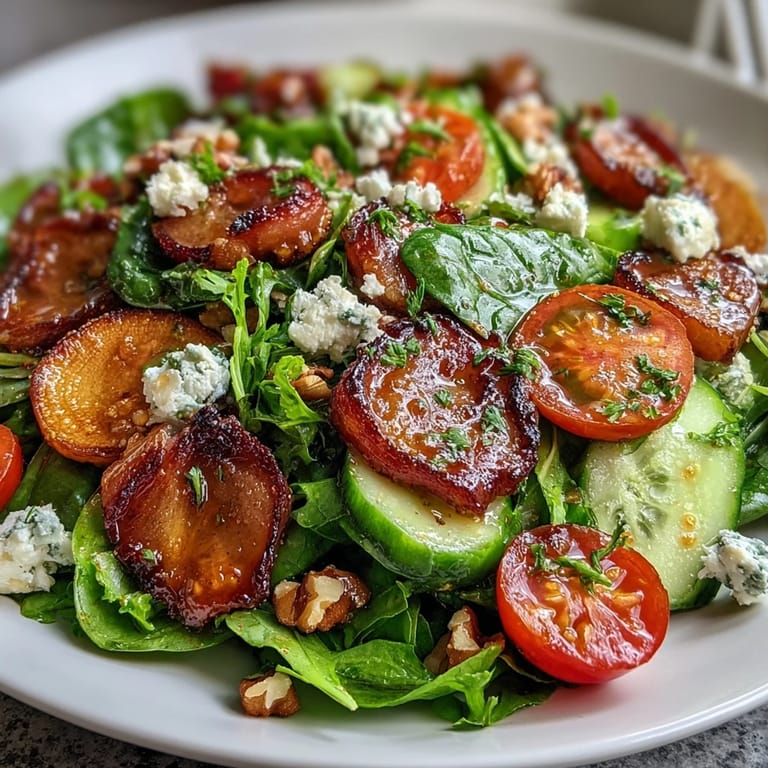
- Crumbled feta cheese: Optional but it adds a salty, tangy element that makes the whole salad feel complete and deliberate.
- Dijon mustard: The backbone of your dressing, bringing sharpness and body that honey alone could never achieve.
- Honey: This rounds out the mustard and adds subtle sweetness without making the dressing cloying or restaurant-style heavy.
- Extra-virgin olive oil: Don't skip the quality here because it's the foundation of your dressing and you taste it in every bite.
- Apple cider vinegar or white wine vinegar: Apple cider is slightly sweeter and warmer, while white wine vinegar is more delicate—use whichever matches your mood.
- Sea salt and freshly ground black pepper: These aren't afterthoughts, they're what make the dressing taste intentional instead of generic.
Tired of Takeout? 🥡
Get 10 meals you can make faster than delivery arrives. Seriously.
One email. No spam. Unsubscribe anytime.
Instructions
- Make the dressing first:
- Put your mustard and honey in a small bowl or jar and whisk them together until they look like a paste, then slowly drizzle in your olive oil while whisking constantly—this emulsifies everything and keeps the dressing from separating into sad puddles on your salad. Season with vinegar, salt, and pepper, then taste it straight and adjust because dressing should make your eyes light up a little.
- Prepare your vegetables with care:
- Wash your greens and spin them dry, then slice your cucumber, halve your tomatoes, slice your radish thin, and julienne your carrot—this takes longer to read than to do, and everything should feel fresh and crisp in your hands. If you're using nuts, toast them in a dry pan for about five minutes while you're slicing vegetables, shaking the pan so they brown evenly and don't burn.
- Build the salad:
- Put all your greens and vegetables in a large bowl and drizzle the dressing over them gently, then toss with your hands or wooden spoons so every leaf gets touched by dressing without getting bruised. The whole motion should feel light and encouraging, not aggressive.
- Finish and serve:
- Sprinkle your toasted nuts and crumbled feta across the top right before serving, then bring it to the table immediately while everything is still cold and crisp and full of potential.
 Save to Pinterest
 My daughter came home from school complaining about cafeteria salad and I made this for her the next day, and she ate the whole bowl without her phone, without commentary, just quietly enjoying something fresh and good. That moment reminded me that even the simplest recipes can create small pockets of peace in a chaotic week.
Variations That Keep Things Interesting
The beauty of this salad is that it adapts to whatever you have available or whatever your body is craving. In spring I stick close to the original, but as summer heats up I add grilled chicken or crispy chickpeas for protein, and suddenly it becomes a complete meal instead of a side dish. Come fall I've been known to add roasted beets or sliced apple, which sounds unexpected but works because the honey mustard dressing has enough complexity to handle bolder flavors.
The Dressing Explained
This dressing works because it's built on a principle of balance—the mustard and vinegar provide sharp, acidic elements that wake up your palate, while the honey and olive oil add richness and roundness that keeps it from tasting aggressive or one-dimensional. The emulsification is what makes it cling to the greens instead of sliding to the bottom of the bowl, and that happens when you whisk the oil in slowly while the mustard and honey are already together. I've learned that cheap olive oil makes this taste generic, but a good one makes it taste like something you'd order at a restaurant and be thrilled about.
Storage and Make-Ahead Wisdom
The dressing keeps beautifully in a mason jar in the fridge for up to two weeks, and shaking it before each use brings it back together if the oil and vinegar have started to separate. I often prep the vegetables earlier in the day and store them separately in containers, then assemble and dress the salad right when it's time to eat, which means you get the best of both worlds—efficiency and crispness. The nuts and feta should always be added at the last moment so they maintain their texture and presence instead of getting soggy or forgotten.
- Refrigerate your salad bowl for ten minutes before serving if you want everything to stay extra cold and refreshing.
- Double the dressing recipe and keep it on hand as a general-purpose condiment for roasted vegetables, grain bowls, and even sandwiches.
- If you need to make this vegan, maple syrup works beautifully in place of honey and adds a slightly deeper flavor.
 Save to Pinterest
 This salad has become my answer to the question of how to eat well without effort, and the answer is usually just paying attention to good ingredients and a dressing that deserves to exist. Make it this week when the weather turns kind.
Recipe FAQs
- → What greens are best for this salad?
Use a mix of tender spring greens like arugula, baby spinach, and mâche for balanced flavor and texture.
- → How can I make the dressing smooth and emulsified?
Whisk the Dijon mustard, honey, olive oil, vinegar, salt, and pepper together vigorously until fully combined and creamy.
- → Can I add protein to this dish?
Yes, sliced grilled chicken or chickpeas work well for added protein without overpowering the fresh flavors.
- → What nuts complement the salad best?
Toasted walnuts or pecans add a crunchy texture and nutty richness that complements the greens.
- → How do I adapt this for a vegan diet?
Replace honey with maple syrup and omit the feta cheese to keep the flavors vibrant and plant-based.