 Save to Pinterest
 Every October, without fail, my kitchen fills with that unmistakable pumpkin spice aroma the moment I crack open a can of purée, and I'm transported back to my grandmother's kitchen where pumpkin pie wasn't just dessert—it was the unofficial start of the season. She never measured twice, never consulted a recipe card, just moved with the kind of certainty that comes from making the same pie every single year. I've spent the last decade trying to capture that exact balance she had, that perfect tension between custard-smooth and just barely set in the center. This version is what I've landed on, refined through countless autumn afternoons and a few minor kitchen mishaps I'd rather not repeat.
I made this for my partner's family the first time we hosted Thanksgiving together, and I remember standing at the oven window watching it bake, genuinely nervous that I'd somehow mess it up after years of practice. When I sliced into it at the table and that perfect wobble in the center held steady without cracking, I saw everyone relax—that pie became the thing everyone talked about afterward, which meant a lot coming from a family with some pretty serious kitchen credentials.
Ingredients
- Unbaked 9-inch pie crust: The foundation of everything, and honestly, store-bought works beautifully if you don't have the time or energy for homemade—there's no shame in that choice.
- Canned pumpkin purée (not pie filling): This distinction matters more than you'd think; pie filling has spices and sweeteners already built in, which throws off the entire balance.
- Light brown sugar: It dissolves into the custard more smoothly than white sugar and adds a subtle molasses note that feels like it belongs in autumn.
- Eggs: These bind everything together and give the filling its custard-like set, so use large ones for consistency.
- Evaporated milk and heavy cream: The combination creates that silky texture that feels luxurious without being dense or overly rich.
- Cinnamon, ginger, nutmeg, cloves: Each spice adds a different layer of warmth; don't skip any of them or try to substitute one for another because they each play a specific role.
- Salt: This seems minor, but it amplifies all the spices and prevents the filling from tasting flat.
- Vanilla extract: A teaspoon might seem generous, but it rounds out the spice profile in a way that feels sophisticated rather than obvious.
Tired of Takeout? 🥡
Get 10 meals you can make faster than delivery arrives. Seriously.
One email. No spam. Unsubscribe anytime.
Instructions
- Set up your oven:
- Preheat to 220°C (425°F) and position the rack on the lower third of your oven—this is crucial because the high initial heat sets the crust before the custard, and the lower position ensures even baking. If your rack is too high, you'll end up with a soggy bottom crust, which is the kind of mistake you only need to make once.
- Prepare the pie crust:
- Roll out your crust and fit it into the 9-inch pie dish, then trim and crimp the edges however feels natural to you. Pop it in the refrigerator while you mix the filling—this keeps it firm and prevents unnecessary shrinking during baking.
- Mix the custard:
- In a large bowl, whisk together the pumpkin purée, brown sugar, eggs, evaporated milk, heavy cream, and all the spices until everything is completely smooth with no lumps. The mixture should look like silky pumpkin velvet when you're done, and you should be able to see the whisk leave a trail for just a moment before it disappears back in.
- Fill and bake:
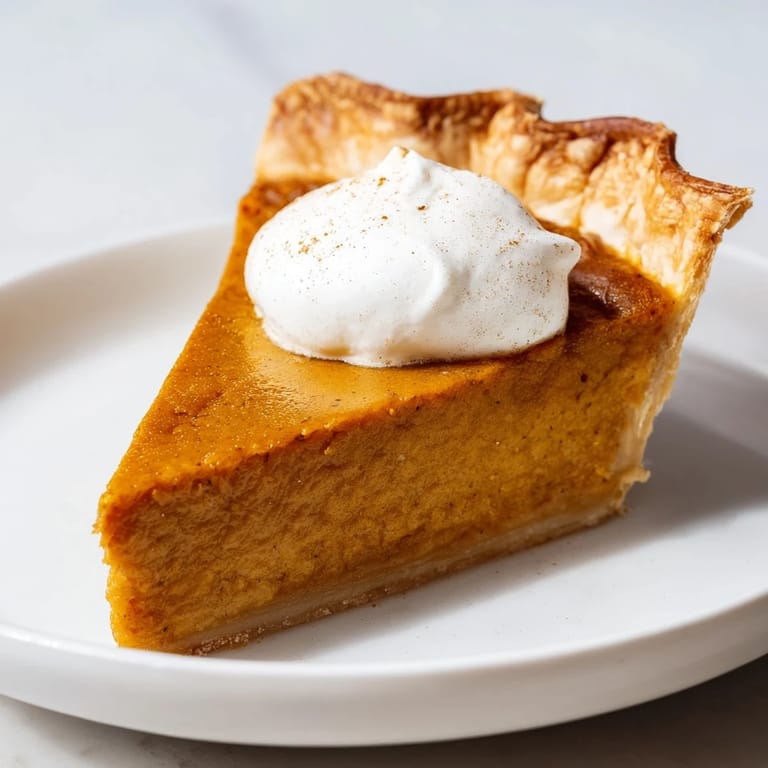
- Pour the filling into the chilled crust and transfer it carefully to the preheated oven. Bake at the high temperature for 15 minutes to set the crust, then lower the temperature to 175°C (350°F) and bake for another 40 minutes until the center has just a slight jiggle when you gently shake the pan—this jiggle is your signal that it's done, not underbaked.
- Cool completely:
- This is the hardest part: you have to actually let it cool all the way down, at least 2 hours on a wire rack, before you even think about slicing. I know it's tempting, but a warm pie falls apart; a cooled pie slices clean.
- Serve with intention:
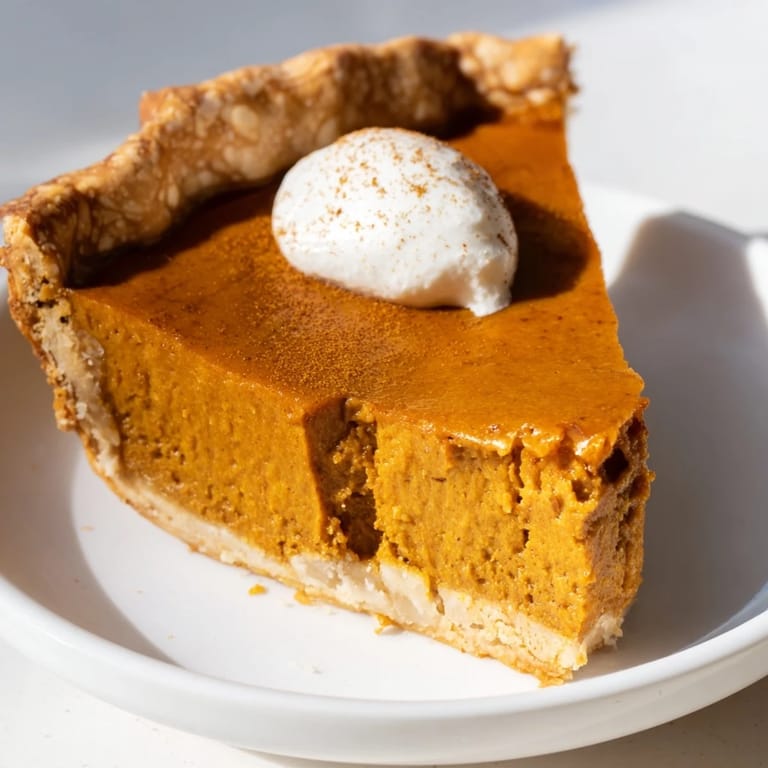
- Plain is perfect, but if you want to get fancy, a dollop of unsweetened whipped cream is the move—it adds just enough textural contrast without fighting with the spices.
 Save to Pinterest
 There's something almost meditative about pumpkin pie season, the way it signals a shift toward gathering and shared tables. For me, this pie stopped being just a recipe years ago and became the thing I make when I want to say 'I'm glad you're here' without having to say it out loud.
Crust Confidence
I spent years apologizing for my pie crusts—either they'd shrink, or they'd be tough, or they'd brown too quickly—until I realized I was overthinking it. A store-bought crust is genuinely excellent and takes away the anxiety, but if you do want to use homemade, the key is chilling it before baking and not being afraid to let it sit in the fridge while you prep the filling. The cold keeps it from shrinking, and the initial blast of high heat in the oven sets it before the custard weight pulls it down.
The Science of Set
Pumpkin pie filling is a custard, which means it sets through the coagulation of eggs as they warm up, not through baking it solid. This is why that jiggle in the center is actually a feature, not a bug—the residual heat continues to set the pie as it cools, and if you bake it until it looks completely firm, you'll end up with a pie that's slightly overcooked and might crack. The center should look like it's barely holding together when it comes out, which feels wrong until you bite into it and realize it's perfect.
Make-Ahead Magic and Storage
This pie actually improves when made a day ahead because the flavors have time to marry and the custard sets more firmly in the refrigerator. You can bake it, cool it completely, cover it loosely, and store it in the fridge for up to three days without any loss of texture or flavor. If you want to get ahead even further, you can mix the filling the day before, keep it covered in the fridge, and pour it into the crust and bake it whenever you're ready.
- Make-ahead pie needs to be stored in the fridge, not on the counter, to prevent bacterial growth in the eggs and dairy.
- If you want to reheat slices, a gentle warming in the oven at 150°C (300°F) for about 10 minutes brings back a little of that fresh-baked warmth.
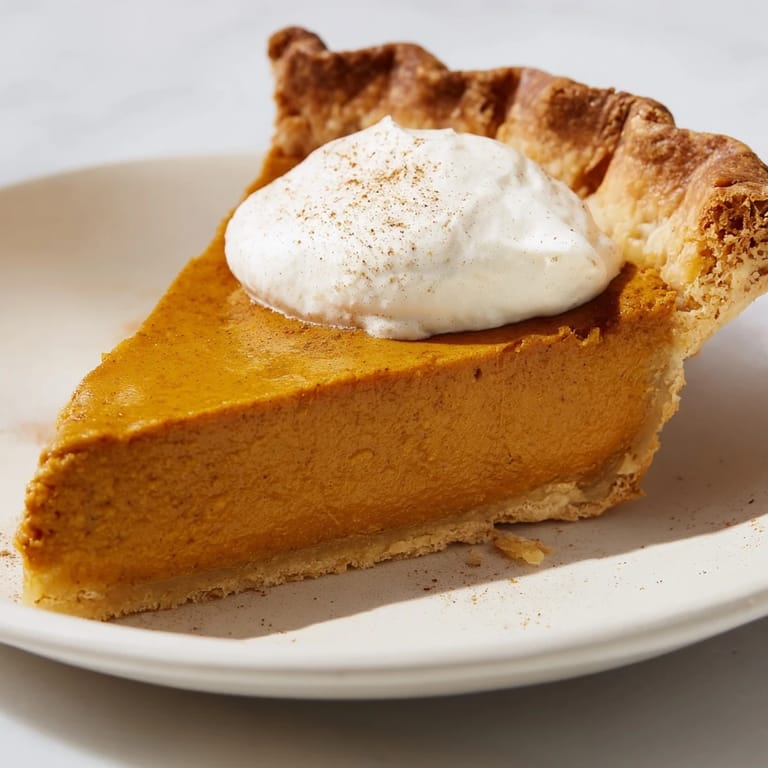
- Whipped cream topping is best added right before serving so it stays fluffy rather than melting into the pie.
 Save to Pinterest
 Pumpkin pie is the dessert that feels like comfort in a slice, the one that tastes like it took way more effort than it actually did. Make this when you want to fill your kitchen with the smell of autumn and remind everyone at your table that sometimes the simplest things are the ones we come back for year after year.
Recipe FAQs
- → What kind of pumpkin should be used?
Use pure canned pumpkin purée, not pre-spiced pumpkin pie filling, to control flavors accurately.
- → Can I make the crust from scratch?
Yes, a homemade flaky pie crust or store-bought unbaked crust work well for this dessert.
- → How do the spices affect the flavor?
Cinnamon, ginger, nutmeg, and cloves add warm, aromatic notes that balance the pumpkin's natural sweetness.
- → What is the best way to bake the custard?
Start baking at a high temperature to set the crust, then lower the heat to gently cook the filling until just set with a slight jiggle.
- → Can this be prepared ahead of time?
Yes, baking a day in advance and refrigerating helps flavors meld and eases serving on the day of events.