 Save to Pinterest
 My friend's graduation day arrived with sunshine and nervous energy, and somewhere between the ceremony and the reception, I found myself piping buttercream onto cake layers in a borrowed kitchen. The gold leaf wasn't my first instinct—I'd planned something simpler—but watching her walk across that stage made me want to create something that felt as special as the moment deserved. That's how this elegant cake became my go-to celebration dessert, the one that says you're worth the extra effort without being fussy about it.
I'll never forget watching my neighbor's eyes light up when she saw this cake at her daughter's graduation party—she actually asked for the recipe before tasting it. That moment taught me that presentation matters as much as flavor, especially when you're celebrating something big. The delicate balance of elegance and approachability is exactly what makes this cake feel special rather than intimidating.
Ingredients
- All-purpose flour: The foundation—sift it with baking powder and salt before mixing to avoid lumps that trap in the batter.
- Baking powder: This is what gives the cake its tender crumb; don't skip it or substitute with baking soda without adjusting other ingredients.
- Unsalted butter: Room temperature is non-negotiable; cold butter won't cream properly and you'll end up with a dense cake instead of fluffy layers.
- Granulated sugar: The two cups in the batter create structure and moisture, so measure carefully by weight if you have a scale.
- Large eggs: Also room temperature—they incorporate air more easily and create a lighter, more stable emulsion with the butter.
- Vanilla extract: Real vanilla makes a noticeable difference here; the artificial version tastes thin by comparison.
- Whole milk: The alternating wet-dry method prevents overmixing and keeps the crumb tender and delicate.
- Egg whites for buttercream: Heating to 160°F kills any bacteria while keeping the meringue silky and stable.
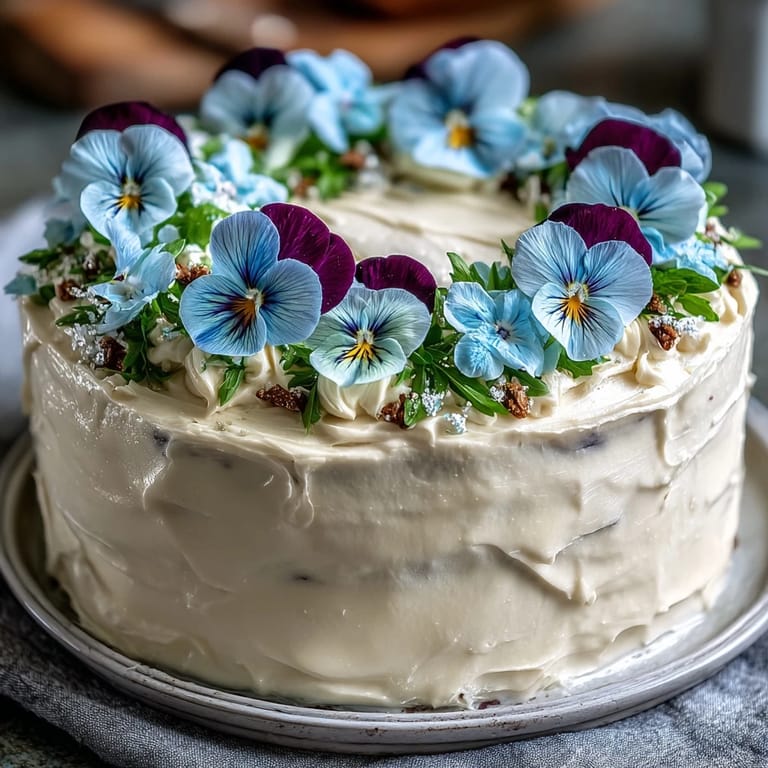
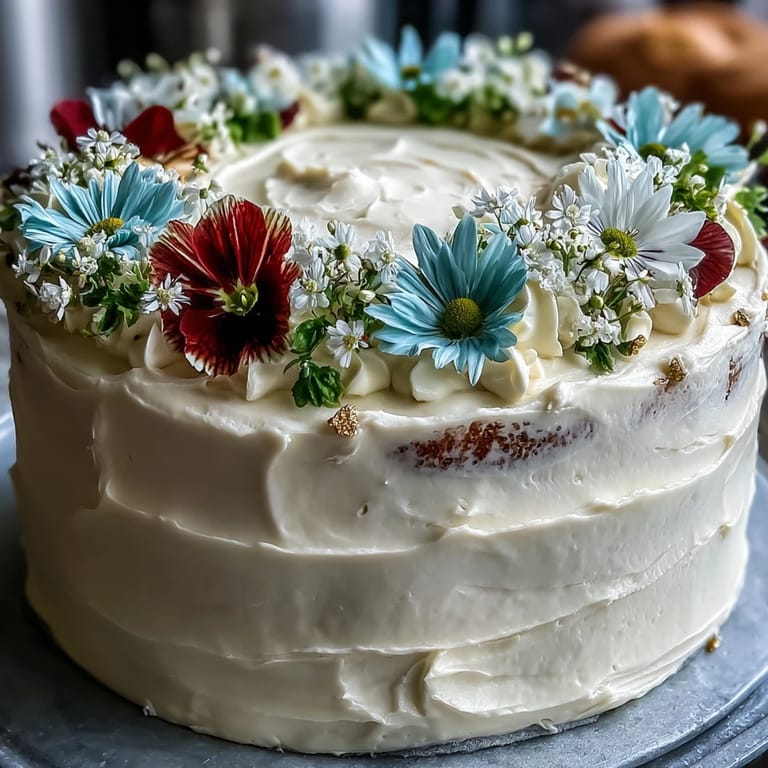
- Edible flowers: Buy from specialty food shops or farmers markets that label them specifically as edible and pesticide-free; grocery store flowers are treated with chemicals.
- Edible gold leaf: The sheets cling easily with just a gentle brush stroke; real gold leaf looks richer than the imitation, though either works.
Tired of Takeout? 🥡
Get 10 meals you can make faster than delivery arrives. Seriously.
One email. No spam. Unsubscribe anytime.
Instructions
- Prepare your pans and preheat:
- Heat your oven to 350°F and grease three 8-inch pans thoroughly, then line them with parchment—this double protection keeps the cakes from sticking to the sides. Cold pans make a difference too, so don't rush this step.
- Mix your dry ingredients:
- Whisk flour, baking powder, and salt together in a separate bowl to distribute the leavening evenly throughout. This whisking creates tiny air pockets that help the cake rise.
- Cream butter and sugar:
- Beat them together for a full three minutes until the mixture is pale, fluffy, and noticeably lighter in color and texture. You're incorporating air here, which is what makes the final cake tender rather than dense.
- Add eggs one at a time:
- Beating well after each egg ensures the mixture stays emulsified and the egg whites don't curdle the butter. If you add them too fast, the batter can look curdled and grainy.
- Alternate wet and dry ingredients:
- Start and finish with flour, mixing on low speed only until you don't see streaks—overmixing at this point develops gluten and makes the cake tough. The milk keeps the batter from becoming too thick while you're mixing.
- Divide and bake:
- Distribute batter evenly among pans by eye or by weight, smooth the tops, and bake for 28–32 minutes until a toothpick comes out clean. Your oven might bake faster or slower, so start checking at 25 minutes.
- Cool properly:
- Leave cakes in the pans for exactly 10 minutes so they set enough to handle, then turn them out onto wire racks to cool completely. Rushing this step causes the layers to break apart.
- Make the Swiss meringue buttercream:
- Whisk egg whites and sugar over simmering water, stirring constantly until it reaches 160°F and feels smooth between your fingers. You're pasteurizing the eggs while dissolving the sugar into a glossy mixture.
- Beat until cool and fluffy:
- Transfer to your mixer and beat on high until stiff peaks form and the bowl feels cool to the touch, about 8–10 minutes. This takes longer than you'd expect, but patience creates the silky texture that makes this frosting special.
- Add butter gradually:
- Add cubed butter a few pieces at a time on medium speed, letting each addition fully incorporate before adding more. If the buttercream looks broken or curdled at first, keep mixing—it comes back together smoothly.
- Assemble the cake:
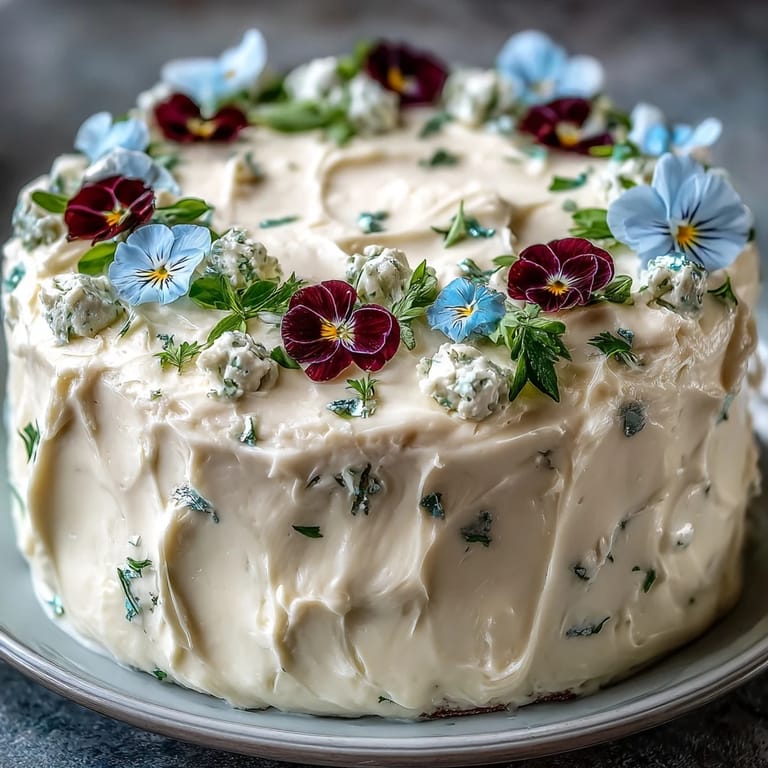
- Place one layer on your serving plate, spread a generous layer of buttercream, repeat with the second layer, then add your final layer. A crumb coat (thin layer of frosting) seals in crumbs, chills for 20 minutes, then a final smooth coat covers everything beautifully.
- Apply gold leaf and flowers:
- Use a soft food-safe paintbrush to gently press edible gold leaf onto sections of the frosting—it clings easily without adhesive. Arrange flowers decoratively wherever they feel balanced, and add a gold ribbon around the base if the mood strikes.
 Save to Pinterest
 There's something almost ceremonial about pressing edible flowers onto a cake you've built layer by layer, knowing someone will remember both the cake and the person it celebrates. That's when this recipe stops being instructions and becomes a ritual.
Room Temperature Matters More Than You Think
The first time I made this cake with cold ingredients straight from the fridge, the batter was grainy and the cake turned out dense and sad. Room temperature butter creams into a fluffy cloud that traps air throughout the batter, and room temperature eggs emulsify smoothly instead of looking curdled. Even milk that's slightly warm incorporates more gently than cold milk. Let your ingredients sit on the counter for 30–45 minutes before you start—it's the difference between a mediocre cake and one worth celebrating.
The Crumb Coat Changes Everything
Applying a thin base layer of buttercream, chilling it, then frosting over it is the secret that makes your final cake look magazine-worthy instead of rustic. The crumb coat seals in all the little cake crumbs that would otherwise get dragged across your smooth final frosting, and the chill firms up the base so you can apply the second layer without disturbing it. This step feels like busywork when you're tired, but it's worth every minute.
Sourcing Edible Flowers and Gold Leaf
Buying edible flowers from a regular grocery store is risky because they're often treated with pesticides meant for ornamental flowers, not food. A farmers market with a reliable flower vendor or a specialty food shop that explicitly labels flowers as edible and pesticide-free is worth the extra step. Gold leaf comes in sheets that cling to your brush easily—real gold leaf looks warmer and more luxurious than the imitation variety, but both photograph beautifully and taste like nothing at all.
- Always verify that your flower source guarantees edible, pesticide-free blooms before you buy them.
- Apply gold leaf gently with a soft brush just before serving so it stays shimmery and doesn't tarnish.
- Fresh edible flowers last longer on the cake if you add them no more than an hour before serving.
 Save to Pinterest
 This cake has become my answer to every celebration that deserves to feel special—not fussy, just thoughtful. Make it for someone you're proud of, and watch their face light up the way mine does every time.
Recipe FAQs
- → What type of flour is best for the sponge?
All-purpose flour is used for a tender yet sturdy structure, ideal for layering and decorating.
- → How do you make Swiss meringue buttercream?
Egg whites and sugar are gently heated over simmering water until warm, then whipped until stiff peaks form. Softened butter is added gradually until smooth and creamy.
- → Are the edible flowers safe to consume?
Only flowers labeled edible and pesticide-free should be used to ensure safety and enhance presentation.
- → How is the gold leaf applied to the cake?
Using a food-safe paintbrush, delicate sheets of gold leaf are carefully placed onto the chilled buttercream surface for a shimmering finish.
- → Can the sponge be adapted for other flavors?
Yes, a chocolate variation can be made by replacing part of the flour with cocoa powder for a rich twist.