 Save to Pinterest
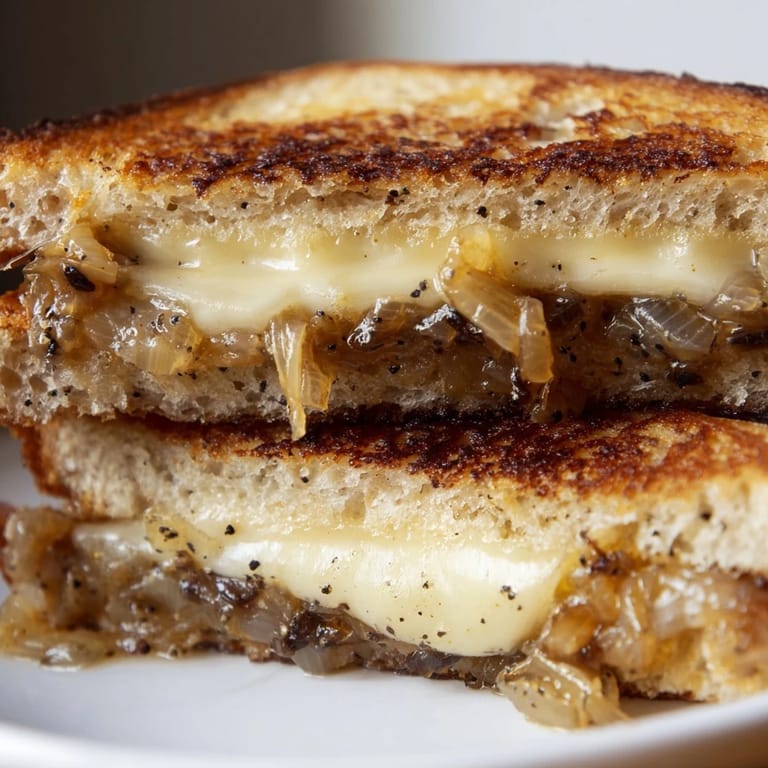
 There was a Tuesday evening last fall when I stood at the stove, stirring onions that had already been cooking for twenty minutes, wondering if I'd ever see them turn that deep amber color everyone talks about. My kitchen smelled like a French bistro, and I kept sneaking bites straight from the pan. When I finally pressed those onions between two slices of buttered sourdough with sharp cheddar, the sandwich came out so good I made it again the next night. Sometimes the simplest things teach you the most about patience.
I made this for my neighbor after she helped me carry groceries up three flights of stairs in the rain. She took one bite, closed her eyes, and said it tasted like the sandwich she used to get at a cafe in Vermont twenty years ago. We sat at my tiny kitchen table with mugs of tomato soup, and she told me stories about that cafe while the rain drummed against the window. Food has a way of unlocking memories you didn't know people were carrying.
Ingredients
- Sourdough or country bread: You want something sturdy with a bit of chew, because flimsy bread will get soggy under all those onions and turn into a mess in the pan.
- Unsalted butter, softened: Soft butter spreads evenly without tearing the bread, and it gives you that golden, crackling crust that makes the whole sandwich worth it.
- Sharp white cheddar cheese, grated: White cheddar melts beautifully and has a sharper, cleaner flavor than yellow, which cuts through the sweetness of the onions like a knife.
- Yellow onions, thinly sliced: Yellow onions have the right balance of sugar and sulfur to caramelize into something deeply sweet and complex, not just soft and bland.
- Olive oil: A little oil keeps the onions from sticking early on and helps them cook evenly before they start releasing their own moisture.
- Salt: Salt pulls water out of the onions so they soften faster and caramelize instead of steaming, plus it makes everything taste like itself.
- Sugar (optional): A pinch of sugar halfway through gives the onions a head start on browning if they're being stubborn, but it's not necessary if you have the time.
- Freshly ground black pepper: Just a few grinds add a little heat and earthiness that keeps the sandwich from tasting one-note sweet.
Tired of Takeout? 🥡
Get 10 meals you can make faster than delivery arrives. Seriously.
One email. No spam. Unsubscribe anytime.
Instructions
- Slow-cook the onions:
- Heat olive oil in a large skillet over medium heat, then add the sliced onions and salt, stirring until every slice is coated and glistening. Let them cook for 20 to 25 minutes, stirring every few minutes, until they shrink down and turn a deep golden brown, adding sugar halfway through if they need encouragement.
- Clear the skillet:
- Remove the caramelized onions from the heat and set them aside in a bowl. Wipe out any sticky bits from the skillet so your sandwich doesn't pick up burnt flavor later.
- Butter the bread:
- Spread softened butter on one side of each slice of bread, making sure to go all the way to the edges. Lay two slices buttered side down on your counter or cutting board.
- Build the sandwiches:
- Divide the grated cheddar evenly between the two slices, then pile the warm caramelized onions on top and add a few grinds of black pepper. Top with the remaining bread slices, buttered side facing up.
- Grill low and slow:
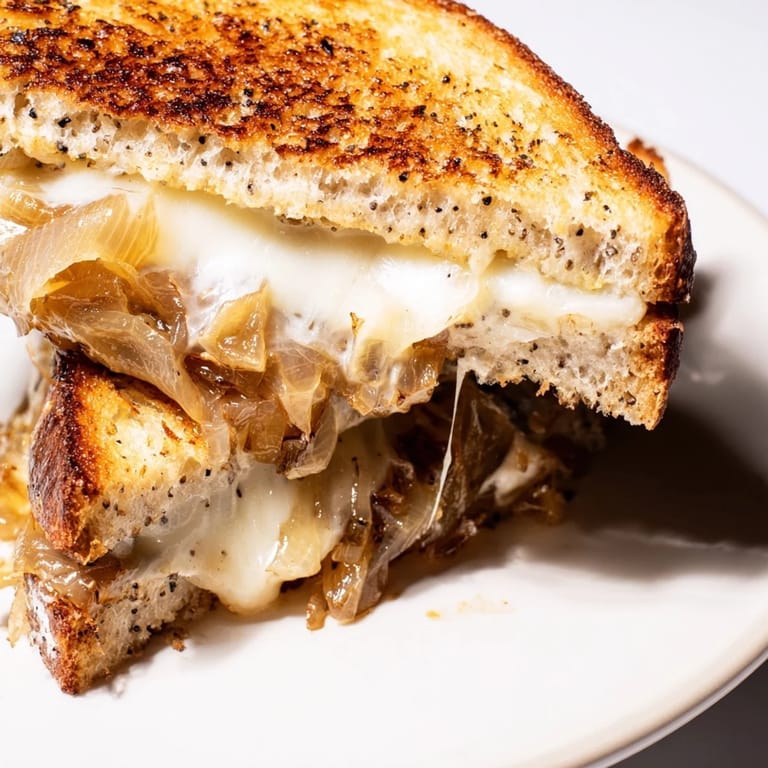
- Heat the skillet over medium-low and place both sandwiches in the pan, pressing gently with your spatula. Cook for 3 to 4 minutes per side until the bread is crisp and deeply golden and the cheese has melted into the onions.
- Rest and serve:
- Pull the sandwiches from the pan and let them rest for 2 minutes so the cheese sets just enough that it doesn't all run out when you slice. Cut in half and serve while still hot.
 Save to Pinterest
 The first time I served this at a small dinner party, I made six sandwiches and cut them into triangles, and they disappeared in under ten minutes. One friend stood by the stove hoping I'd make more, and another asked if I'd teach her how to caramelize onions because she'd always been too scared to try. That's when I realized this sandwich wasn't just food, it was permission to slow down and do something simple really well.
Choosing Your Bread
Sourdough is my first choice because the tangy flavor plays off the sweet onions, and the crust gets incredibly crispy without drying out. Country bread or a good bakery white works too, just make sure the slices are thick enough to hold up under the weight of the filling. I've tried this with thin sandwich bread and it turned into a soggy, floppy mess that fell apart in the pan.
Cheese Swaps and Variations
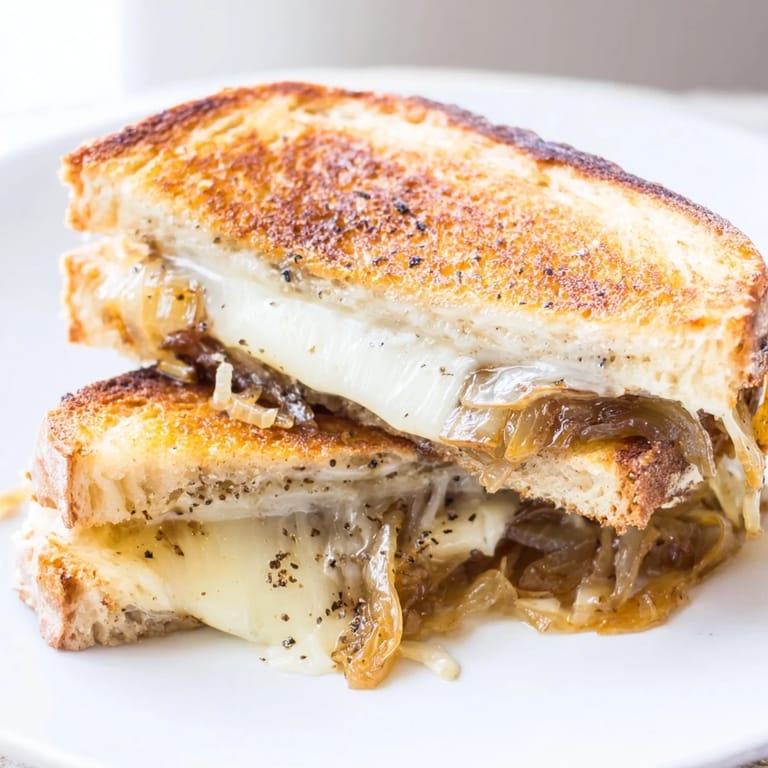
Sharp white cheddar is classic, but Gruyere makes this taste like French onion soup in sandwich form, nutty and rich with a silky melt. Fontina is another favorite because it's creamy and mild, letting the onions be the star. I once used a mix of cheddar and a little bit of blue cheese, and it was polarizing but incredible if you like bold flavors.
Serving and Pairing Ideas
This sandwich begs to be dunked into a bowl of tomato soup, the kind you make with canned tomatoes, cream, and a handful of fresh basil. A simple arugula salad with lemon and olive oil cuts the richness and makes it feel like a complete meal. Sometimes I'll serve it with pickles or a handful of kettle chips, because the crunch and acidity wake up your palate between bites.
- Add a few fresh thyme leaves to the onions in the last minute of cooking for an herby, earthy note.
- Smear a thin layer of Dijon mustard on the inside of the bread before adding the cheese for a little sharpness and complexity.
- If you have leftover caramelized onions, store them in the fridge and use them on burgers, pizzas, or stirred into scrambled eggs.
 Save to Pinterest
 This sandwich has become my answer to grey afternoons and long weeks when I need something that tastes like comfort without a lot of fuss. I hope it finds a place in your kitchen the way it has in mine.
Recipe FAQs
- → How long does it take to caramelize the onions?
The onions require 20-25 minutes of cooking over medium heat, stirring occasionally. This slower cooking allows the natural sugars to break down and develop a deep golden color and sweet, jammy texture. Adding a touch of sugar halfway through can enhance browning.
- → What type of cheese works best?
Sharp white cheddar provides excellent flavor and melting properties. You can also substitute Gruyère or fontina cheese for variation. Avoid pre-sliced cheese when possible, as freshly grated cheese melts more smoothly and evenly.
- → How do I prevent the bread from burning?
Cook on medium-low heat and monitor carefully. Press gently on the sandwich while cooking to ensure even contact with the skillet. If the exterior browns too quickly, reduce heat further and cook longer. The goal is golden-brown bread with melted cheese inside.
- → Can I prepare the caramelized onions ahead?
Yes, caramelize the onions up to 2 days in advance and store them in an airtight container in the refrigerator. Reheat gently before assembling the sandwich, or use them at room temperature and warm through in the skillet with the assembled sandwich.
- → What bread works best for this sandwich?
Sourdough and country bread are ideal choices due to their sturdy structure and ability to hold up to caramelized toppings without becoming soggy. White bread or whole wheat can work, though firmer varieties produce the crispiest crust when toasted.
- → Should I butter the bread inside or outside?
Butter only the outside surfaces of the bread slices. The buttered exterior makes contact with the skillet, creating that crispy, golden-brown crust. Keep the inside surfaces dry so the cheese and onions stay in place and melt properly.