 Save to Pinterest
 There's something about a lasagne that doesn't require a mountain of pots and pans that makes a weeknight feel suddenly manageable. I discovered this one-pan magic on a Tuesday when I'd promised to bring dinner to friends but genuinely couldn't face the usual rigmarole of straining pasta and juggling multiple burners. The smoky paprika hit me first when I opened the spice jar—that warm, almost bacon-like aroma that made me pause and think, this might actually work. Layering everything right there in the same pan felt like cheating at cooking, but the results were anything but lazy.
My brother ate three helpings and spent the entire meal talking with his mouth full, asking if I'd finally figured out what I was doing in the kitchen. That might be the highest compliment he's ever given me without irony involved. Watching people go back for seconds of something I'd made in a single ovenproof pan felt like vindication—proof that convenience and deliciousness aren't actually enemies.
Ingredients
- Olive oil: Use good quality here since it's doing the sautéing work early on and sets the flavor tone.
- Onion and garlic: The aromatics that make everything smell like home cooking within the first minute.
- Carrot, red bell pepper, mushrooms, courgettes: This vegetable mix creates texture and substance—mushrooms especially add that meaty, umami quality.
- Smoked paprika: This is the soul of the dish, so don't reach for regular paprika and pretend it's the same thing.
- Dried oregano and thyme: Dried herbs work better here than fresh because they're already concentrated and play well with the smoky elements.
- Chili flakes: Optional but I never skip them—just a whisper of heat makes everything taste more alive.
- Tomato paste: Concentrated tomato flavor that deepens the sauce without watering it down.
- Chopped tomatoes: The liquid base that cooks the lentils and creates sauce.
- Soy sauce: A secret ingredient that adds saltiness and umami depth you can't quite place but definitely taste.
- Red lentils: They break down slightly while cooking, thickening the sauce naturally and adding protein.
- Vegetable stock: Flavor-wise, this matters more than water, so use proper stock if you can.
- Butter and flour: The classic béchamel base that becomes creamy and luxurious.
- Whole milk: Cold milk whisked into the roux gradually prevents lumps—patience here pays off.
- Ground nutmeg: Just a quarter teaspoon transforms béchamel from basic to sophisticated.
- Mature cheddar or hard cheese: Adds sharpness and helps the sauce set properly as it bakes.
- No-boil lasagne sheets: They soften in the oven from the moisture in the sauces, so trust the process.
- Mozzarella for topping: Gets golden and bubbly, creating that irresistible crispy-cheesy layer.
Tired of Takeout? 🥡
Get 10 meals you can make faster than delivery arrives. Seriously.
One email. No spam. Unsubscribe anytime.
Instructions
- Heat and soften the aromatics:
- Pour olive oil into your ovenproof pan over medium heat, then add finely chopped onion and minced garlic. Let them cook for about two minutes until fragrant and the onion starts turning translucent—you want them softened but not browned at this stage.
- Build the vegetable base:
- Add the diced carrot, red bell pepper, mushrooms, and courgettes to the pan and cook for 5-6 minutes, stirring occasionally, until everything has softened slightly and started to release its moisture. You'll notice the pan becomes more vibrant as the vegetables break down.
- Wake up the spices:
- Stir in smoked paprika, dried oregano, thyme, chili flakes if using, and tomato paste, then cook for one minute. This blooming process releases the essential oils in the spices and prevents them from tasting raw.
- Simmer the lentil sauce:
- Add your canned tomatoes, soy sauce, rinsed red lentils, and vegetable stock, then bring everything to a gentle simmer. Cover and cook for 15-20 minutes, stirring now and then, until the lentils are completely tender and the sauce has thickened enough to coat the back of a spoon—it should look less soupy and more substantial.
- Make the béchamel sauce:
- In a separate medium saucepan, melt butter over medium heat, then stir in flour and cook for one minute to create a paste. Gradually whisk in cold milk a little at a time, stirring constantly to prevent lumps, then cook for about five minutes until the sauce is thick enough to coat the back of a spoon—it should look like thick cream soup, not watery.
- Season the béchamel:
- Remove the pan from heat, then stir in ground nutmeg, grated cheese, and season carefully with salt and white pepper. The cheese will melt into the warm sauce and add richness.
- Begin layering in the pan:
- Remove roughly half of the vegetable bolognese from your ovenproof pan and set it aside on a plate. Spread one-third of the béchamel sauce over the remaining sauce in the pan as an even layer, then break lasagne sheets to fit and create a single layer on top.
- Add the second layer:
- Spread half of your reserved bolognese over the pasta layer, pour another third of the béchamel over that, then break and arrange another layer of lasagne sheets to cover.
- Top with the final layer:
- Spread the remaining bolognese over the pasta, top with the final layer of lasagne sheets, then pour the remaining béchamel over everything. Sprinkle grated mozzarella evenly across the top.
- Bake covered:
- Cover the pan loosely with foil and bake at 200°C (180°C fan) for 25 minutes. The foil traps steam and helps the no-boil pasta soften.
- Finish until golden:
- Remove the foil and bake for another 10-15 minutes until the top is golden brown and the sauce is bubbling around the edges. The cheese on top should be lightly browned but not burned.
- Rest before serving:
- Let the lasagne stand for 10 minutes before serving—this helps it hold together when you cut into it and makes plating easier. Garnish with fresh basil leaves if you have them.
 Save to Pinterest
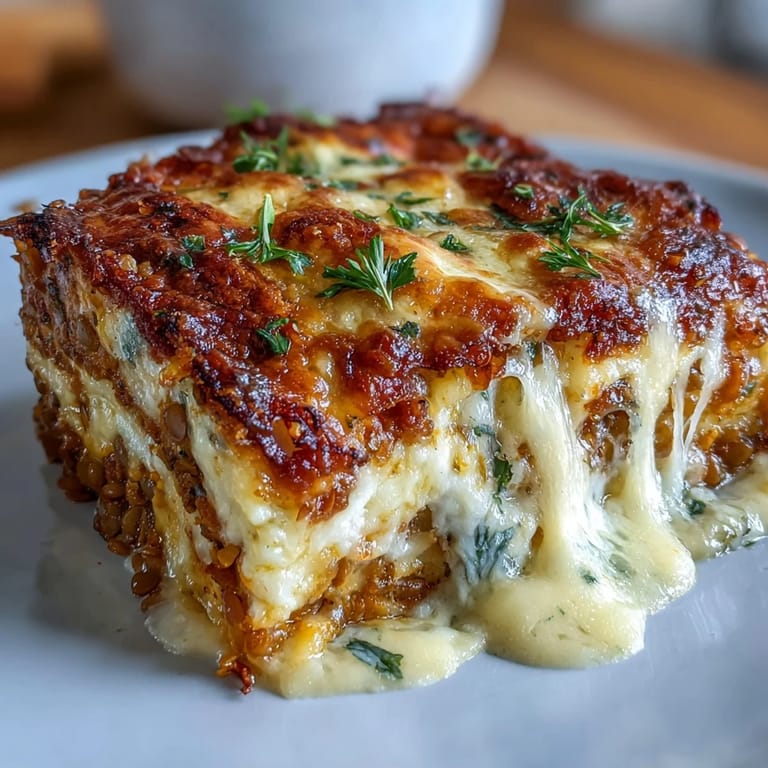
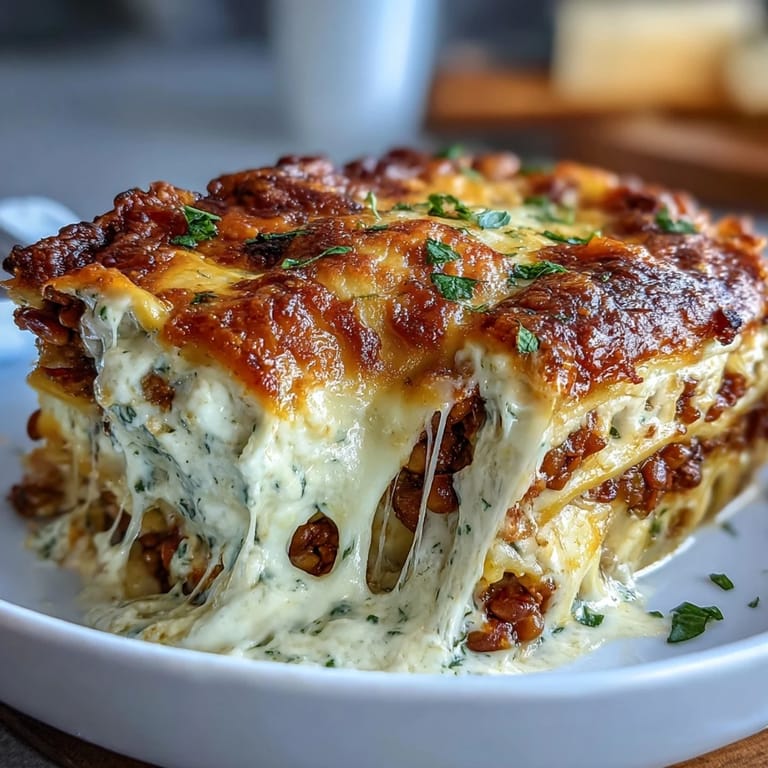
 I'll never forget my partner standing by the oven, steam fogging up her glasses as she peeked under the foil, completely mesmerized by the bubbling cheese and lentil sauce creating something golden and inviting. That moment when you've made something genuinely good and you see it reflected in someone else's face—that's why we cook.
Why This Works as One Pan
The magic isn't just convenience, though that's definitely part of it. By building everything in a single ovenproof pan, you're layering flavors directly where they'll finish cooking, which means the pasta absorbs sauce as it bakes instead of floating separately. The vegetables and lentils create enough structure that the lasagne stays intact, and the cheese on top forms a seal that keeps everything moist underneath. It's actually more efficient than traditional lasagne because nothing dries out.
Making It Your Own
I've played with this recipe enough times now to know where you can improvise. Add a splash of red wine to the lentil sauce if you want deeper, more complex flavor—I do this when I'm feeling fancy. Swap the mushrooms for walnuts if you prefer, or add fresh spinach right before layering. Even swapping the cheddar for gruyère changes the whole cheese profile in a way that feels sophisticated.
Serving and Storage
Serve this with a crisp green salad and crusty garlic bread if you want to feel properly indulgent. The leftovers actually improve after a night in the fridge as the flavors continue to develop and meld together. You can reheat individual portions in the microwave, but the oven at 180°C for about 20 minutes will restore that golden, bubbly top that makes it taste freshly made.
- For a vegan version, use dairy-free butter, plant-based milk, and vegan cheese without losing any of the comfort factor.
- The smoked paprika really is non-negotiable, so source a good one if your supermarket version tastes stale.
- Prep your vegetables the day before and store them in containers—it cuts your actual cooking time nearly in half when you're ready to go.
 Save to Pinterest
 This lasagne proved to me that you don't need a recipe blog's worth of equipment or hours of fussing to create real, satisfying food that people actually want to eat. It's the kind of dish that turns a regular dinner into something worth talking about.
Recipe FAQs
- → Can I make this lasagne vegan?
Yes, substitute dairy-free butter and plant-based milk for the béchamel sauce. Use vegan cheese alternatives or nutritional yeast. Ensure your lasagne sheets are egg-free. The flavor and texture remain excellent.
- → Can I prepare this ahead of time?
Assemble the entire lasagne up to 24 hours in advance, cover tightly, and refrigerate. Add 5-10 minutes to the covered baking time if cooking from cold. Leftovers reheat well in the microwave or oven.
- → Why use smoked paprika?
Smoked paprika provides a deep, smoky flavor that typically comes from meat-based dishes. It's essential for the distinctive taste profile—regular paprika won't give the same result.
- → What type of pan works best?
Use a large, deep ovenproof skillet or frying pan (at least 28cm diameter). Cast iron or stainless steel works well. Ensure it's deep enough to hold multiple layers without bubbling over.
- → Can I use regular lasagne sheets?
No-boil sheets work best as they cook perfectly in the sauce. If using traditional pasta, par-boil for 3-4 minutes until pliable before layering, and add a splash extra water to the sauce.
- → How do I know when lentils are done?
Taste a few lentils after 15-20 minutes of simmering. They should be tender with no chalky center, but still hold their shape. Overcooking makes them mushy.