 Save to Pinterest
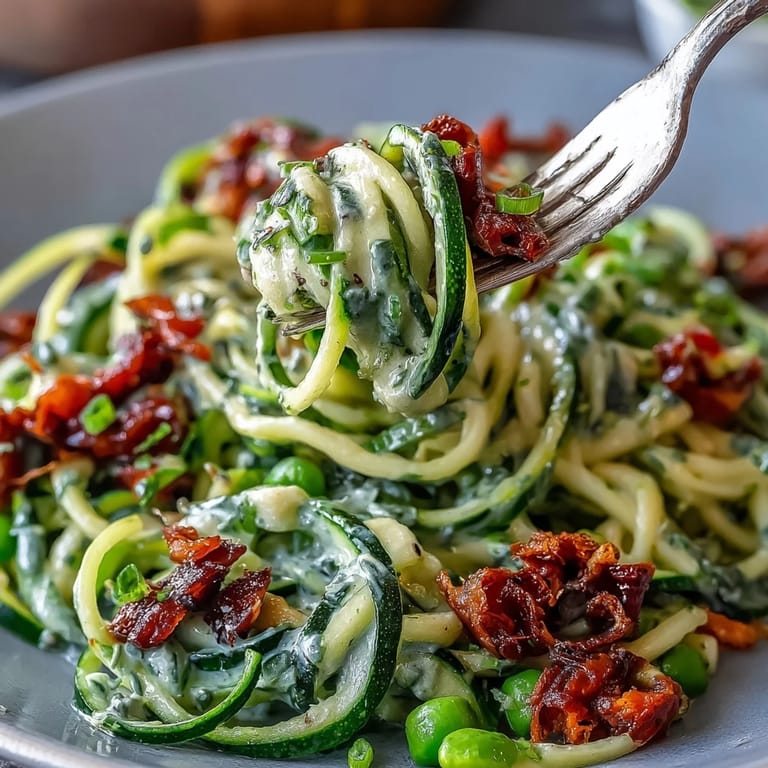
 There's something wonderfully satisfying about watching a spiralizer transform a plain zucchini into delicate ribbons of noodles—it feels like magic, honestly. One Tuesday evening when I was tired of heavy dinners, I threw together whatever colorful vegetables were in my crisper drawer and whisked up a peanut sauce on a whim, and suddenly I had something light but genuinely craveable on my plate. That's when I realized how much I'd been overthinking healthy eating, turning it into something complicated when it could just be this simple and delicious.
I made this for a friend who'd just started trying to eat lighter, and watching her face light up when she tasted how rich and satisfying it was despite being full of vegetables—that moment changed how I think about healthy cooking. She asked for the recipe before finishing her bowl, and now it shows up at her dinner table at least twice a month. Sometimes the best meals are the ones that quietly prove to people that good food and wellness aren't opponents.
Ingredients
- Zucchinis, spiralized: Use firm, medium-sized zucchini for the best texture; if they're too large they can be watery and pithy inside.
- Red bell pepper: The sweetness balances the tanginess of the sauce beautifully, and the bright color makes the whole dish feel vibrant.
- Carrot: Julienne it thin so it cooks quickly and stays crisp, adding a gentle natural sweetness.
- Snap peas: These are your textural hero—they stay snappy no matter what, giving each bite a satisfying crunch.
- Green onions: Save some of these for garnish at the very end; they taste completely different when they're fresh versus cooked down.
- Natural peanut butter: The real stuff with just peanuts and salt makes a difference in flavor; it's worth seeking out.
- Soy sauce or tamari: Tamari is the move if you're gluten-free, and honestly tastes equally good.
- Rice vinegar: This specific vinegar keeps things bright without being too aggressive or sharp.
- Lime juice: Fresh lime is essential here; bottled just doesn't have the same life to it.
- Maple syrup or honey: A touch of sweetness rounds out the sauce and keeps it from feeling one-dimensional.
- Toasted sesame oil: The toasted kind is crucial; it has a nutty depth that plain sesame oil misses.
- Garlic and ginger: Mince the garlic fine and grate the ginger fresh; both add an aromatic brightness that makes the sauce sing.
- Red pepper flakes: These are optional but worth having on hand if you like a subtle background heat that builds slowly.
Tired of Takeout? 🥡
Get 10 meals you can make faster than delivery arrives. Seriously.
One email. No spam. Unsubscribe anytime.
Instructions
- Prep your vegetables with intention:
- Spiralize or slice everything first so you're not scrambling once the heat is on—stir-frying is all about momentum. The vegetables don't need to be perfect; they just need to be roughly the same thickness so they cook evenly.
- Whisk together your peanut sauce:
- Start with 2 tablespoons of warm water and whisk everything together until smooth, then add more water a little at a time until you have that perfect pourable consistency. Taste it as you go; this is your chance to adjust the balance of salty, tangy, and sweet to your preference.
- Heat your pan and get it properly hot:
- A large nonstick skillet or wok should be medium-high before anything touches it, and if you want an extra layer of flavor, add a tiny splash of sesame oil. You'll hear the sizzle when you add the vegetables—that's your signal everything is right.
- Cook the heartier vegetables first:
- Bell pepper, carrot, and snap peas go in together and should cook for about 2 to 3 minutes, stirring every few seconds so they stay crisp but warm through. You want to still feel that pleasant crunch when you bite into them.
- Add the zucchini noodles gently:
- These are delicate and will release water if you're rough with them or overcook them, so toss gently for just 2 to 3 minutes until they're heated through but still have some firmness. The residual heat will keep cooking them even after you remove the pan from the heat, so don't wait for them to look cooked.
- Bring everything together with the sauce:
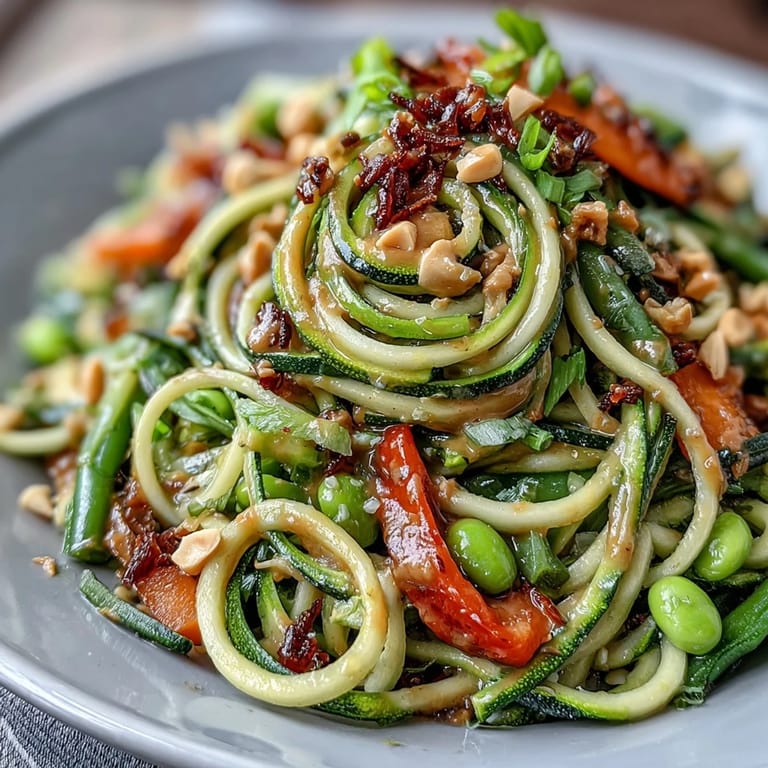
- Pour the peanut sauce over all the vegetables and toss for another minute or so until everything is coated and warm. This is when the whole dish comes alive—the sauce is creamy but not heavy, clinging to all those vegetables.
- Finish and serve right away:
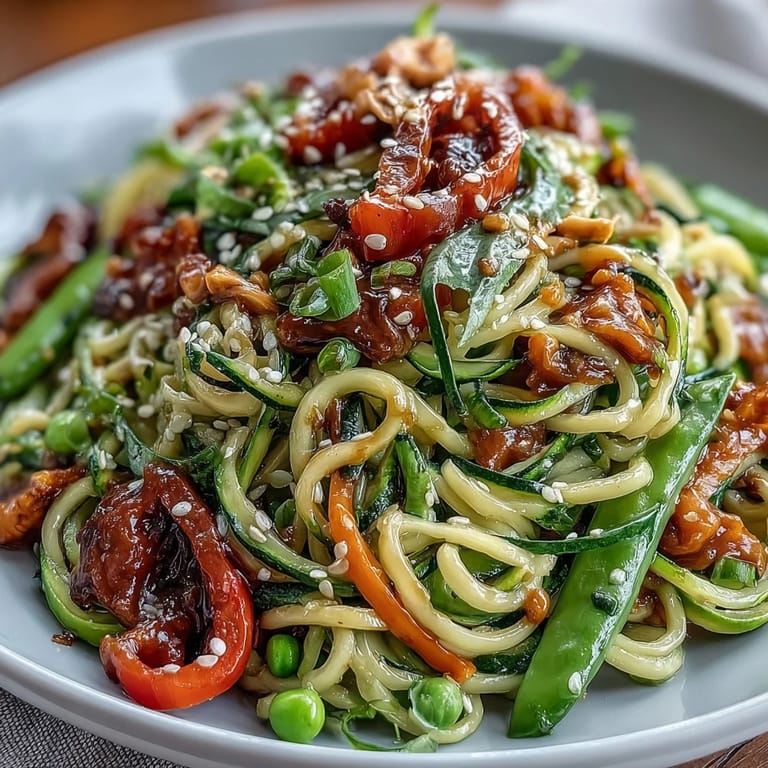
- Top with chopped peanuts, fresh green onions, and cilantro if you're using it, and get it to the table while it's still warm and the vegetables still have their texture.
 Save to Pinterest
 I've found myself making this when I want to feel nourished without spending my whole evening in the kitchen, which honestly happens more often than I expected. There's something about a bowl of this that feels both indulgent and virtuous at the same time, which is the kind of food magic I'm always chasing.
Swapping Proteins Without Losing Flow
If you want to turn this into something more substantial, grilled tofu, shredded rotisserie chicken, or quickly pan-seared shrimp all work beautifully without changing a single thing about the base recipe. I usually add protein after the vegetables are done cooking so it stays separate and doesn't get lost in the sauce, and honestly it's nice to have that contrast of textures on your plate. The dish becomes different—heartier, more of a full dinner—but the soul of it stays exactly the same.
Variations That Taste Just As Good
Once you make this a few times, you'll start seeing how adaptable it is—mushrooms get silky in that peanut sauce, broccoli stays crisp, and thin asparagus is absolutely magical if it's in season. I've also played around with cashew butter and almond butter, and while they taste slightly different, they're equally delicious in their own ways. The structure of the recipe is solid enough that you can swap vegetables and nuts without worrying you'll mess up something fundamental.
Storing and Refreshing What You've Made
If somehow you do end up with leftovers, the vegetables and sauce actually keep reasonably well in separate containers in the fridge for a couple of days, though you'll want to spiralize fresh zucchini when you're ready to eat them again. The sauce reheats perfectly and actually tastes even better the next day after the flavors have gotten to know each other. When you're ready to eat, just gently warm the sauce in a small pan, spiralize fresh zucchini, and quickly cook everything together like you did the first time.
- Store the peanut sauce in an airtight container where it'll keep for up to four days and actually deepen in flavor.
- Pre-spiralized zucchini will stay fresher longer if you pat them dry before storing them, keeping them in the crispest part of your fridge.
- This is genuinely one of those dishes that's better made fresh, so don't feel bad about making it multiple times a week if you love it.
 Save to Pinterest
 This recipe has become my answer to the question of how to eat well without it feeling like a sacrifice, and I hope it becomes that for you too. There's real joy in something this simple, this quick, and this genuinely satisfying.
Recipe FAQs
- → How do I prevent zucchini noodles from becoming soggy?
Cook zucchini noodles briefly, about 2-3 minutes, and avoid overcooking to keep them firm and prevent excess water release.
- → Can I substitute peanut butter with another spread?
Yes, almond or cashew butter works well as a substitute for a peanut-free version without compromising creaminess.
- → What vegetables pair best in this stir-fry?
Bell peppers, carrots, snap peas, and green onions provide both color and texture balance for a vibrant dish.
- → Is this dish suitable for gluten-free diets?
Use tamari instead of soy sauce to keep the dish gluten-free without sacrificing flavor.
- → How can I add protein to this meal?
Top with grilled tofu, chicken, or shrimp for extra protein and a more satisfying plate.
- → What’s the best way to make the peanut sauce creamy and smooth?
Whisk peanut butter with warm water gradually until the sauce reaches a smooth, pourable consistency before mixing.