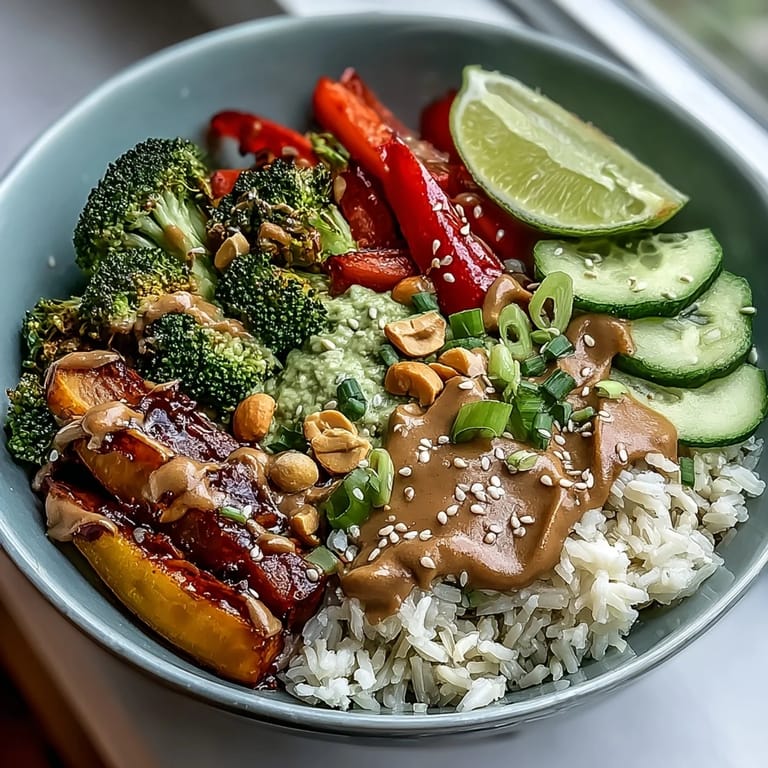
 Save to Pinterest
 One Tuesday evening, my roommate burst through the kitchen door complaining about yet another uninspired dinner, and I found myself pulling vegetables from the crisper drawer with no real plan. Within twenty minutes, this stir-fry was sizzling in the pan, filling the apartment with the most incredible aroma of garlic and ginger. What struck me wasn't just how quickly it came together, but how vibrant everything looked tossed in that silky peanut sauce. She ate three helpings that night and asked me to write down the recipe before she left the kitchen. That's when I realized this wasn't just easy—it was something I'd be making again and again.
I made this for my sister's surprise dinner last spring when she mentioned offhandedly that she was trying to eat more vegetables. She arrived stressed from work, but the moment she smelled the sesame oil hitting the hot pan, her whole expression softened. Watching her fork twirl through those crisp peppers and snap peas while the peanut sauce clung to everything felt like the small magic of feeding someone well. She's made it herself probably two dozen times since then.
Ingredients
- Broccoli florets: The sturdy crown of this dish—they hold their shape and texture beautifully when you keep the heat high and don't overcrowd the pan.
- Red and yellow bell peppers: These aren't just pretty; their natural sweetness balances the savory sauce, and slicing them thin means they cook evenly.
- Carrot: Cut on the diagonal so the flat surfaces catch more heat and caramelize slightly at the edges, adding texture.
- Sugar snap peas: My secret weapon for keeping things interesting—they add a subtle crunch that reminds you these are fresh vegetables, not just filler.
- Red onion: Thin slices mean it softens without disappearing, adding a gentle bite that plays well with the peanut sauce.
- Garlic and ginger: The backbone of the aromatics—fresh garlic minced fine and freshly grated ginger (not jarred) make all the difference in how alive this tastes.
- Natural peanut butter: Look for one with minimal ingredients; the better the peanut butter, the better your sauce will taste.
- Soy sauce: Use tamari if you're avoiding gluten, but don't skip the umami it brings to the sauce.
- Rice vinegar: This keeps everything from tasting flat or one-dimensional; it's the brightness that makes you want another bite.
- Maple syrup or honey: Just enough sweetness to round out the sauce without making it cloying.
- Toasted sesame oil: A little goes a long way—this is where that signature nutty flavor comes from.
- Roasted peanuts and sesame seeds: Don't skip the garnish; the crunch on top is what makes each bite interesting.
Tired of Takeout? 🥡
Get 10 meals you can make faster than delivery arrives. Seriously.
One email. No spam. Unsubscribe anytime.
Instructions
- Make the sauce first:
- In a small bowl, whisk together the peanut butter, soy sauce, rice vinegar, maple syrup, and sesame oil until there are no streaks of peanut butter left. Add the warm water slowly, stirring until it's smooth and pourable like a loose gravy—thinner than you might expect, because the vegetables will release moisture as they cook. Taste it and adjust; if it needs more savory depth, add a touch more soy sauce.
- Heat your pan properly:
- Set a large nonstick skillet or wok over medium-high heat and let it get genuinely hot before adding oil—you want that high-heat sizzle when the vegetables hit, not a slow warm-up. This is how you get that slight char on the edges while keeping everything crisp inside.
- Cook the sturdy vegetables first:
- Add broccoli, bell peppers, carrot, sugar snap peas, and red onion to the hot pan and stir constantly for 4 to 5 minutes. You'll hear them sizzling and see the colors deepen slightly; this is exactly what you want. The vegetables should be tender enough to bite through easily but still have a little resistance.
- Add the aromatics at the end:
- Push the vegetables to the side slightly and add the minced garlic and grated ginger to the cleared space, cooking for just one minute while stirring. This prevents them from burning and ensures their fragrance spreads throughout without becoming harsh or bitter.
- Bring it all together:
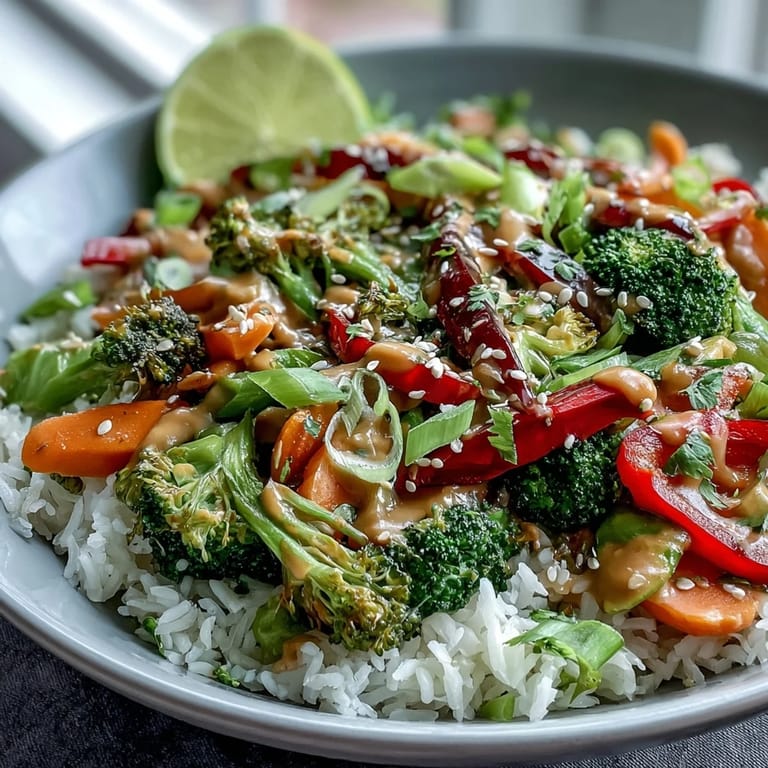
- Pour your peanut sauce over everything and toss until every vegetable is coated in that creamy, nutty goodness. Cook for another minute or two just to heat the sauce through and let the flavors meld. The entire pan should smell absolutely incredible at this point.
- Finish and serve:
- Transfer to a serving bowl or plates and garnish generously with chopped roasted peanuts, sliced green onions, and sesame seeds. Serve immediately over rice if you'd like, with lime wedges on the side for squeezing over everything.
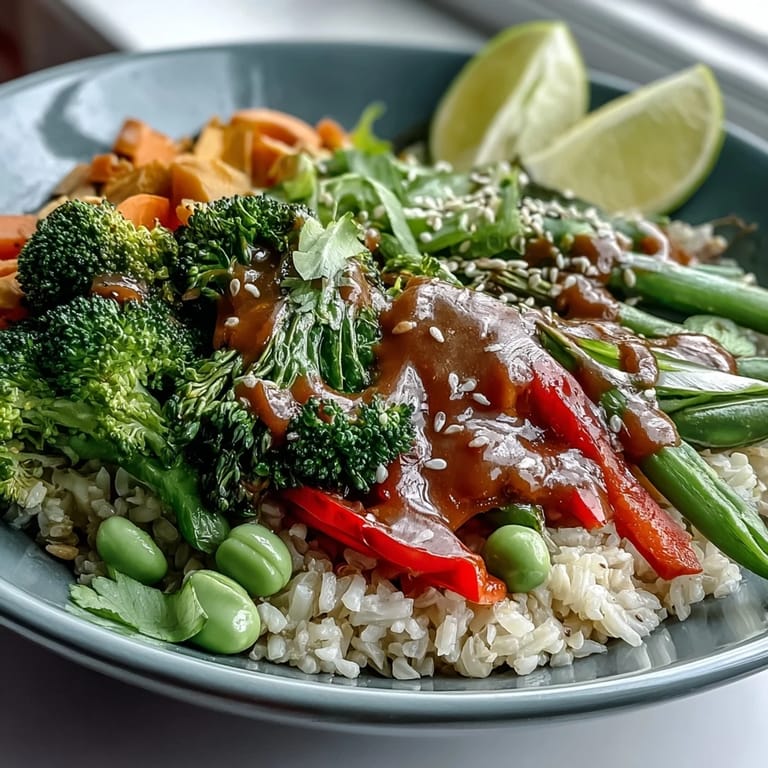 Save to Pinterest
 There's something about eating this straight from the pan with someone you care about—standing at the counter with two forks, stealing bites before it even makes it to the plates. That's when I understood why this recipe became such a regular in my life. It's not fancy or complicated, but it tastes like you tried, and it makes people happy.
Vegetables You Can Swap In
The beauty of a stir-fry is its flexibility, and I've learned this through happy accidents and deliberate experiments. Mushrooms add an earthy depth, zucchini brings a subtle sweetness, and baby corn gives you interesting texture. Even Brussels sprouts work beautifully if you slice them thin and give them slightly longer to cook. The rule I follow is to keep everything roughly the same size so it cooks evenly, and to avoid anything too watery unless you enjoy a saucier result.
Protein Additions That Work
While this is lovely as a vegetarian dish, I've added crispy tofu cubes, chunks of tempeh, and handfuls of edamame depending on what I had available or what I was hungry for. Tofu absorbs the sauce beautifully if you press it first and cook it separately until the edges are golden, then toss it in at the end. The whole meal becomes more substantial without changing the character of what makes it special. Cashews or almonds can add richness too if you prefer them to peanuts.
The Small Moments That Matter
I've learned that stir-frying is as much about intuition as it is about following steps. The smell of garlic hitting hot oil tells you your pan is ready; the sound of vegetables sizzling tells you whether your heat is right. Once you've made this a few times, you'll stop watching the clock and start watching the vegetables, pulling them from heat the moment they look alive rather than cooked to death. This becomes the kind of recipe you make without thinking, which is exactly when it tastes best.
- Squeeze fresh lime over everything just before eating—it brightens the peanut sauce in ways you won't expect.
- If you make extra sauce, it keeps for a week in the refrigerator and transforms other boring vegetables into something worth eating.
- Toast your sesame seeds in a dry pan for 30 seconds right before sprinkling them on top; warm seeds taste infinitely better than cold ones.
 Save to Pinterest
 This is the kind of recipe that feels like a small victory every single time, because it's quick and nourishing and tastes so much better than anything you could pick up on the way home. Make it once, and you'll understand why it deserves a permanent place in your rotation.
Recipe FAQs
- → What vegetables work best in this stir-fry?
Broccoli, bell peppers, carrots, sugar snap peas, and red onion create a colorful mix, but feel free to swap in zucchini, mushrooms, or baby corn based on your preference.
- → Can I make this dish gluten-free?
Yes, substitute soy sauce with tamari to keep the dish gluten-free without compromising flavor.
- → How do I adjust the peanut sauce consistency?
Gradually add warm water while whisking the peanut butter mixture until it reaches a smooth, pourable texture suitable for coating the vegetables.
- → What protein options complement this vegetable stir-fry?
Tofu, tempeh, or edamame can be added for a protein boost without altering the dish's vegetarian and vegan qualities.
- → What sides pair well with this stir-fry?
Steamed jasmine or brown rice works perfectly, and a crisp white wine or iced tea can enhance the meal experience.