 Save to Pinterest
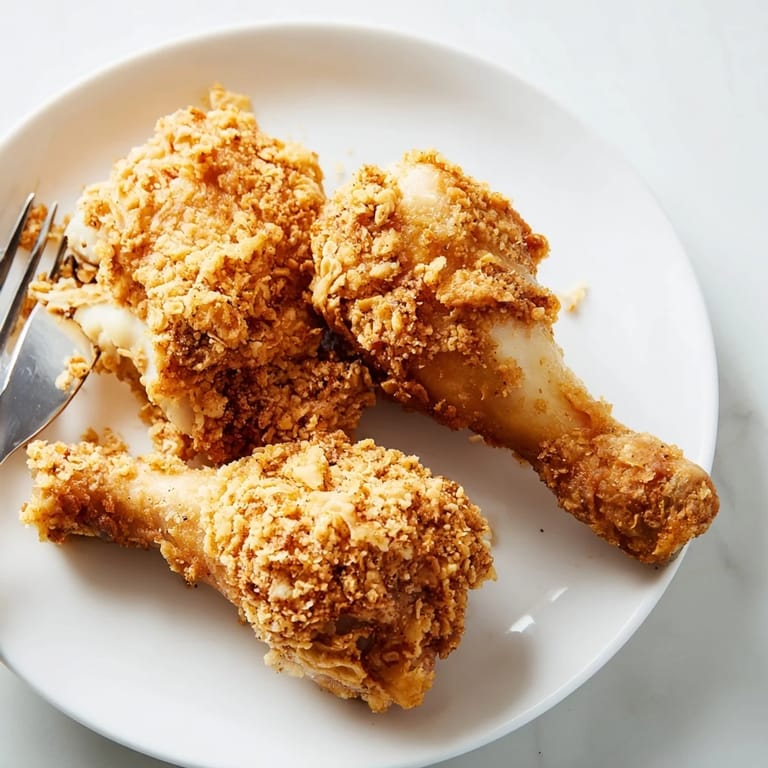
 My grandmother taught me that fried chicken isn't just about technique—it's about patience. She'd say the buttermilk bath was where the magic started, not in the oil. I was maybe twelve, skeptical, watching her soak chicken pieces in what looked like a waste of time. Twenty minutes into frying, when that first golden piece came out and I bit into the crackling exterior giving way to impossibly tender meat, I understood what she meant.
Last summer, my roommate came home from a brutal day at work and just collapsed on the couch. I started frying chicken without asking, and by the time the kitchen filled with that unmistakable golden-brown smell, she was already in the kitchen asking what I was doing. We sat on the porch eating straight from the cooling rack, not talking much, just eating. Fried chicken has this quiet way of fixing things that aren't actually about hunger.
Ingredients
- Chicken (1.2 kg, about 8 pieces), skin-on: Skin-on pieces crisp up better than boneless, and they stay juicier inside—thighs and drumsticks are your best friends here because they're forgiving.
- Buttermilk (240 ml): This is non-negotiable; it tenderizes while adding a subtle tanginess that makes people ask what your secret is.
- Salt (2 tsp for marinade, 1 tsp for coating): Don't skimp—it seasons all the way through and helps the coating stick.
- Black pepper (1 tsp for marinade, 1/2 tsp for coating): Fresh cracked is noticeably better if you have a grinder.
- Paprika (1 tsp) and smoked paprika (1 tsp): The paprika gives color and depth; smoked paprika is what makes people think you know what you're doing.
- Cayenne pepper (1/2 tsp, optional): Skip it if you're cooking for kids, but it adds a warmth that lingers beautifully.
- All-purpose flour (240 g): This is your coating base; don't substitute with anything else here.
- Garlic powder, onion powder, and dried thyme (1 tsp each): These build complexity in the coating so it's not just salty and crispy.
- Vegetable oil (1 liter): Use neutral oil that can handle high heat; the amount keeps temperature stable even when cold chicken goes in.
Tired of Takeout? 🥡
Get 10 meals you can make faster than delivery arrives. Seriously.
One email. No spam. Unsubscribe anytime.
Instructions
- Set the stage with buttermilk:
- Whisk together buttermilk, salt, black pepper, paprika, and cayenne in a large bowl. The mixture should smell warm and inviting. Submerge each chicken piece, turning it so buttermilk gets into every crevice, then cover and refrigerate for at least 2 hours—overnight is worth the wait if you can plan ahead.
- Build your seasoned flour blend:
- In another bowl, combine flour, garlic powder, onion powder, dried thyme, smoked paprika, salt, and black pepper. Mix thoroughly so the spices distribute evenly; if you're worried, sift it together. This is what everyone will taste, so don't rush it.
- Coat with intention:
- Pull chicken from the marinade one piece at a time, letting excess buttermilk drip back into the bowl. Press each piece firmly into the seasoned flour, rotating it so the coating clings to every angle. The flour should look shaggy and generous, not thin.
- Let it rest:
- Arrange coated chicken on a wire rack and leave it alone for 10 minutes. This brief pause lets the coating set so it stays put instead of sliding off in the oil.
- Heat your oil precisely:
- Pour vegetable oil into a deep fryer or large heavy pot and bring it to exactly 175°C (350°F). Use a thermometer—guessing here is how you end up with burnt outside and raw inside. Let the oil stabilize for a few minutes after reaching temperature.
- Fry in patient batches:
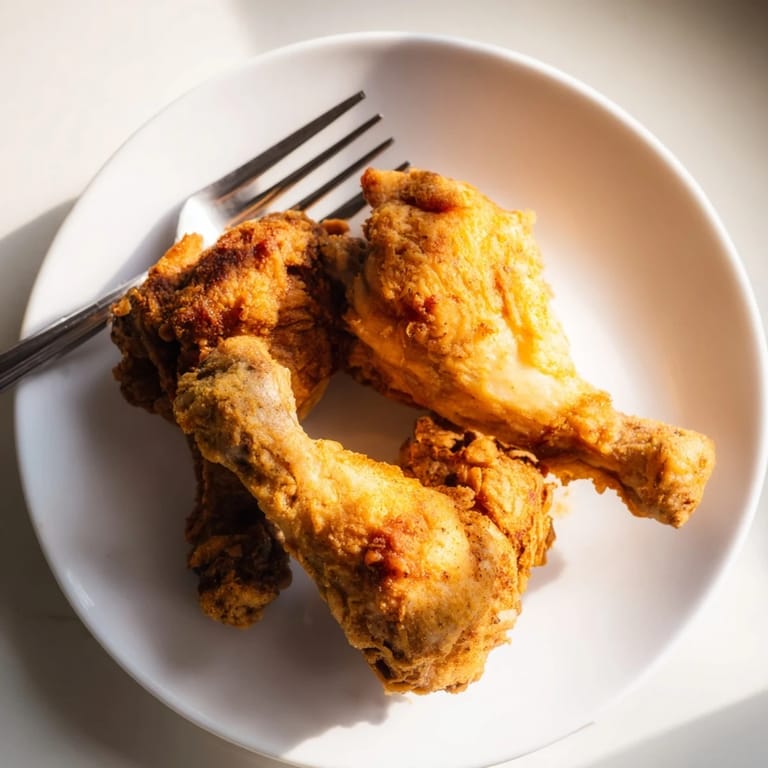
- Slide chicken into the hot oil without crowding; pieces should have breathing room. Turn them occasionally with tongs for the next 12 to 15 minutes until they're deep golden brown and an instant-read thermometer inserted into the thickest piece reads 75°C (165°F). Listen for the sizzle—when it calms down, you're close to done.
- Finish strong:
- Transfer chicken to a wire rack (or paper towels in a pinch) and let it rest for 5 minutes. This stops the cooking and lets steam escape so the crust stays crispy instead of turning soggy.
 Save to Pinterest
 My first attempt at fried chicken was a disaster of soggy, greasy pieces that fell apart when you touched them. My dad didn't laugh—he just asked if I'd let the oil get hot enough. When I tried again the next night and pulled out pieces that actually crunched, he didn't say I told you so. He just asked for seconds. That's when I learned that fried chicken, like most things worth making, rewards attention over talent.
The Buttermilk Difference
Buttermilk isn't just a tenderizer; it's a flavor anchor that makes fried chicken taste more like itself. The acidity breaks down the chicken proteins gently, and the dairy fat carries the seasonings deeper into the meat. You could skip it and just use regular milk or water, but then you're making fried chicken. With buttermilk, you're making something memorable.
Mastering Your Coating
The flour mixture is where personality happens. These spices aren't random—they work together to create layers of flavor that reveal themselves as you eat. The garlic and onion powders ground you in savory territory, the paprikas add visual warmth and subtle smoke, and the thyme sneaks in an herbaceous note that makes people wonder what the secret ingredient is. You can play with this ratio, but start here and listen to what the coating teaches you.
Timing and Temperature
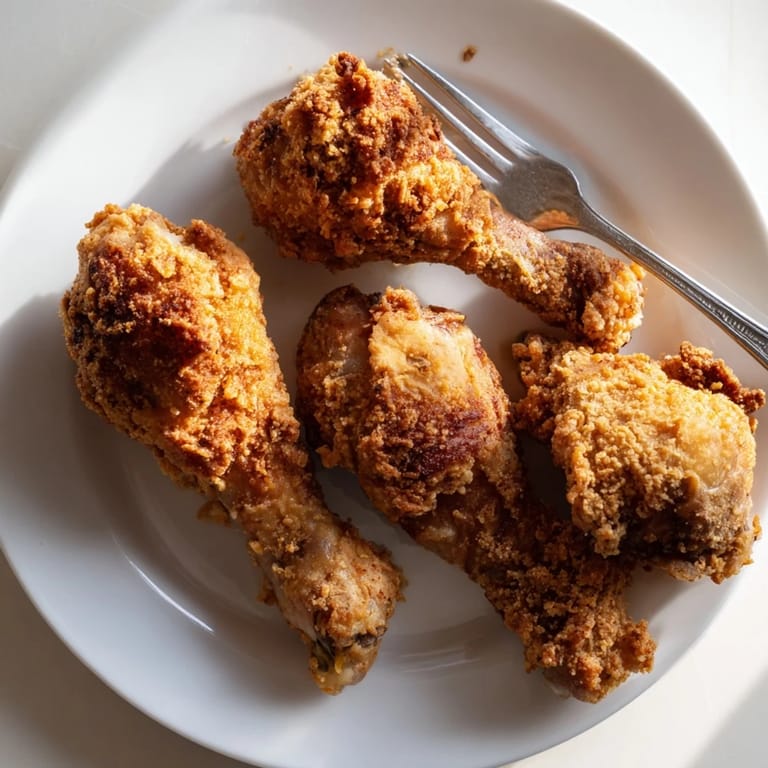
Fried chicken lives in a narrow window where temperature, time, and technique all align. Get one wrong and the whole thing suffers, but when they line up, you understand why this dish has survived centuries and generations.
- Oil temperature should be checked with a thermometer, not guessed—use an instant-read or deep-fry thermometer.
- Don't overcrowd the pan because cold chicken cools the oil too much and you'll end up steaming instead of frying.
- Serve fried chicken hot, but also remember that day-old cold fried chicken on a sandwich is its own kind of perfection.
 Save to Pinterest
 Fried chicken is simple enough for a weeknight dinner but feels special enough for people you want to impress. Make it when you want to say something without words.
Recipe FAQs
- → How long should the chicken marinate?
Marinate the chicken pieces for at least 2 hours. For best flavor and tenderness, overnight marination is ideal.
- → What oil temperature is best for frying?
Heat oil to 175°C (350°F) for optimal frying. This ensures a crispy coating and fully cooked interior.
- → Can I use boneless chicken pieces?
Yes, boneless pieces can be used but reduce frying time to avoid drying out the meat.
- → What spices enhance the coating?
Garlic powder, onion powder, smoked paprika, dried thyme, salt, and black pepper add depth and aroma to the coating.
- → How to achieve extra crispy coating?
Double-dip the chicken by coating in flour, dipping back in buttermilk, then flour again before frying.