 Save to Pinterest
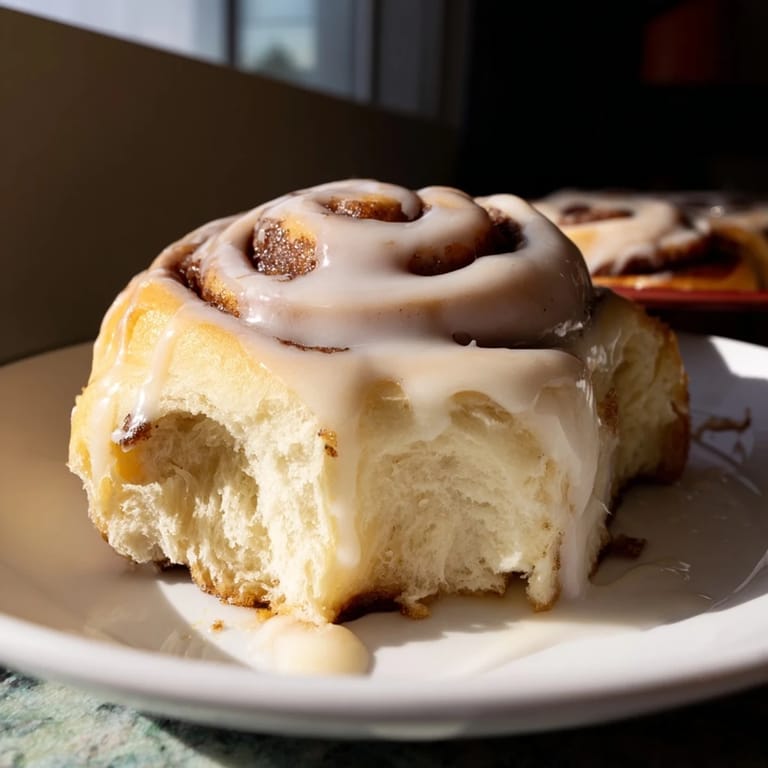
 There's something about the smell of cinnamon rolls baking that makes a kitchen feel like home, even if you're just learning to bake. My first batch came out of the oven on a Saturday morning when I was trying to impress someone, and they weren't perfect—some were dense, others slightly underbaked—but the kitchen smelled so incredible that none of it mattered. Since then, I've made these rolls dozens of times, and I've learned that patience with the rise is everything. Now they're the thing I reach for when I want to feel capable in the kitchen, or when I want to give someone a warm, generous gift.
I made these for my partner during a particularly gray January, and watching their face when they bit into one—that little moment of joy—reminded me why I love cooking. It wasn't about technique or perfection; it was about showing up with something warm and a little bit of care.
Ingredients
- All-purpose flour (4 cups): This is your foundation, and measuring by weight instead of volume keeps you out of trouble.
- Active dry yeast (1 packet): Check the expiration date—old yeast won't rise, and you'll end up with dense rolls that taste fine but feel disappointing.
- Lukewarm milk (1 cup): Too hot and you'll kill the yeast; too cold and nothing happens. If your milk feels like a warm bath on your wrist, you're good.
- Granulated sugar (⅓ cup): This feeds the yeast and sweetens the dough—don't skip it or use honey as a substitute.
- Unsalted butter, melted (¼ cup): Melted, not softened, for the dough itself; this creates that tender crumb.
- Egg (1 large): Brings richness and helps bind everything together; room temperature eggs mix in more smoothly.
- Salt (½ tsp): A pinch of salt does something quiet but important—it keeps the yeast from going wild and actually improves the flavor.
- Brown sugar, packed (½ cup): The cinnamon sugar filling, and packing it means more of it ends up in every bite.
- Ground cinnamon (2 tbsp): This is where the magic lives; don't be shy with it, and check that your cinnamon still smells warm and alive.
- Unsalted butter, softened (¼ cup): For the filling, and it needs to be soft enough to spread easily without tearing the dough.
- Powdered sugar (1 cup): The glaze base; sift it if it's lumpy, and don't skip this final touch.
- Milk (2–3 tbsp): For the glaze; use the smaller amount first and add more until you like the consistency.
- Pure vanilla extract (½ tsp): A small amount that makes the glaze taste complete and not just sweet.
Tired of Takeout? 🥡
Get 10 meals you can make faster than delivery arrives. Seriously.
One email. No spam. Unsubscribe anytime.
Instructions
- Wake up the yeast:
- Pour lukewarm milk into a small bowl and sprinkle the yeast over it. Let it sit for about 5 minutes—you'll see it get foamy and alive, which means it's ready to work.
- Build the dough:
- In a large bowl, mix together flour, sugar, and salt. Pour in the melted butter, egg, and that yeasty milk mixture, then stir everything until a shaggy dough comes together. Don't worry if it looks a little rough right now.
- Knead it smooth:
- Dust your counter with a little flour and knead the dough for 8 to 10 minutes. You'll feel it transform under your hands—at first it'll be sticky and stubborn, then gradually it becomes smooth and elastic and almost alive.
- First rise:
- Place the dough in a greased bowl, cover it with a damp towel, and let it sit in a warm spot (near a window on a sunny day works great) for about an hour. You'll know it's ready when it's roughly doubled in size.
- Prep the filling:
- While the dough rises, mix your brown sugar and cinnamon together in a small bowl. Stir it well so the cinnamon is evenly distributed—you want every roll to taste equally amazing.
- Roll and fill:
- Turn the risen dough out onto your counter and press it into a 16x12 inch rectangle. Spread the softened butter evenly across it, then scatter that cinnamon sugar mixture over the butter, making sure you cover all the corners.
- Roll tight:
- Starting from the long side, roll the dough up tightly, like you're wrapping something precious. As you roll, you're creating all those spiral layers that make cinnamon rolls so satisfying to pull apart.
- Slice and second rise:
- Using a serrated knife (or even dental floss, which works surprisingly well), cut the log into 12 equal pieces. Arrange them in a greased 9x13 inch baking dish, cover with a damp towel, and let them rise for 30 to 45 minutes until they're puffy and touching each other.
- Bake until golden:
- Preheat your oven to 350°F. Bake the rolls for 22 to 25 minutes, watching until the tops turn a soft golden brown—this is when you know they're baked through but still tender inside.
- Glaze while warm:
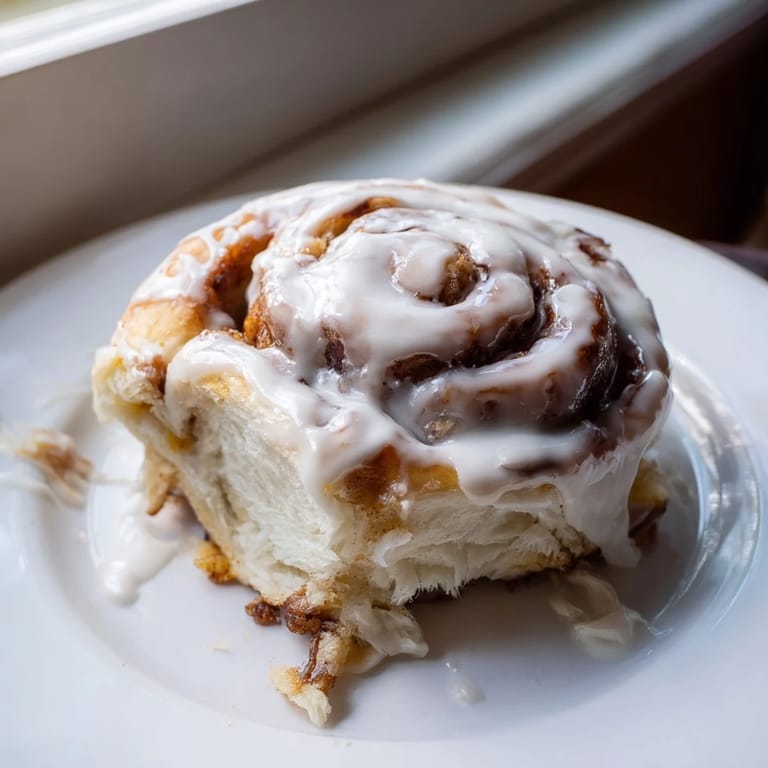
- While the rolls are still slightly warm, whisk together powdered sugar, milk, and vanilla until smooth. Drizzle it generously over the rolls and watch it melt slightly into all those crevices.
 Save to Pinterest
 These rolls have a way of becoming ritual—my Sunday mornings feel different when I'm making them. There's something about the waiting, the rising, the way your hands learn to know when the dough is ready, that turns a recipe into something that grounds you.
The Science of Rise
Rising time can feel unpredictable, and that's because temperature is everything. A warm kitchen might give you an hour; a chilly one might take two. Instead of watching the clock, watch the dough—it should roughly double in volume and jiggle when you gently shake the bowl. I learned to trust my eyes more than the timer, and that small shift changed how I bake.
Variations and Add-Ins
Once you master the basic roll, you can play. I've made them with chopped pecans swirled into the filling, and another time with raisins that got plump and sweet. Some days I'll add a pinch of nutmeg to the cinnamon sugar, or drizzle the glaze with a tiny bit of almond extract instead of vanilla. The dough is forgiving, and it rewards experimentation without demanding perfection.
Storage and Reheating
Fresh rolls are best within the first day, but they keep beautifully in an airtight container for 2 to 3 days. When you want one again, wrap it loosely in foil and warm it in a 300°F oven for about 5 minutes—it'll taste almost as good as fresh. I've also made these ahead and frozen them after the first rise; pull one out, let it come to room temperature, give it a quick second rise, and bake as usual.
- Store cooled rolls in an airtight container at room temperature to keep them soft.
- Reheat gently so the glaze doesn't get too hot and slide off.
- A little extra milk warmed in the microwave and drizzled over before reheating can revive day-old rolls beautifully.
 Save to Pinterest
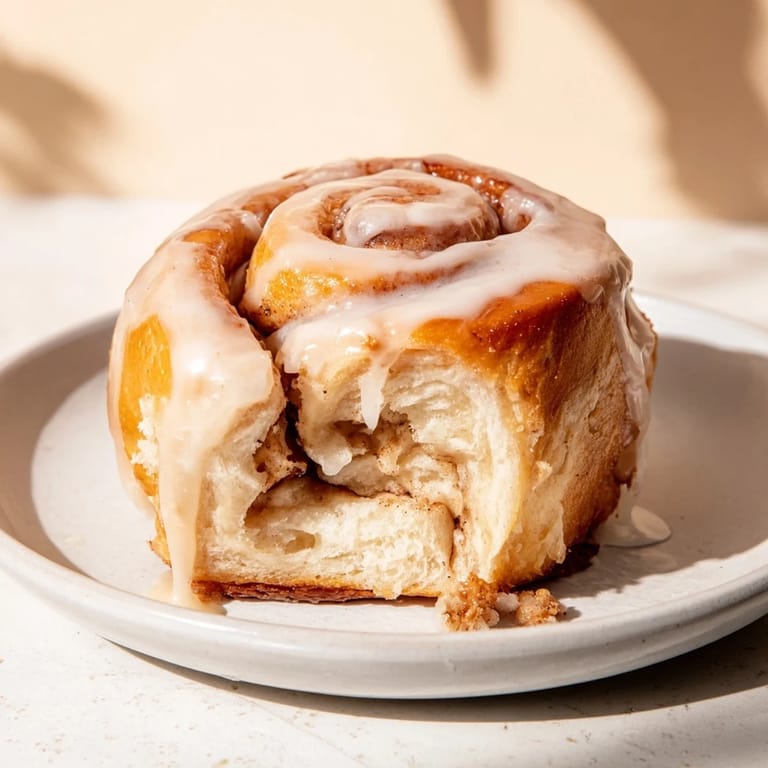
 Cinnamon rolls are proof that good things take a little time, but they're worth every minute of waiting. Make them once and they'll become something you come back to again and again.
Recipe FAQs
- → How do I achieve soft, fluffy rolls?
Ensure the dough is kneaded until smooth and elastic, then allow it to rise fully in a warm spot until doubled in size. This develops gluten and traps air for a tender texture.
- → Can I add nuts or raisins to the filling?
Yes, chopped nuts or raisins can be mixed into the cinnamon sugar filling to add texture and flavor variety.
- → What is the best way to slice the rolls evenly?
Use a serrated knife or dental floss to slice the rolled dough into even pieces without crushing the spirals.
- → How should I store leftovers to maintain freshness?
Store any leftovers in an airtight container at room temperature or refrigerate. Gently reheat before serving to restore tenderness.
- → Can I substitute heavy cream for milk in the dough?
Swapping half the milk for heavy cream adds richness and a slightly denser crumb to the rolls.